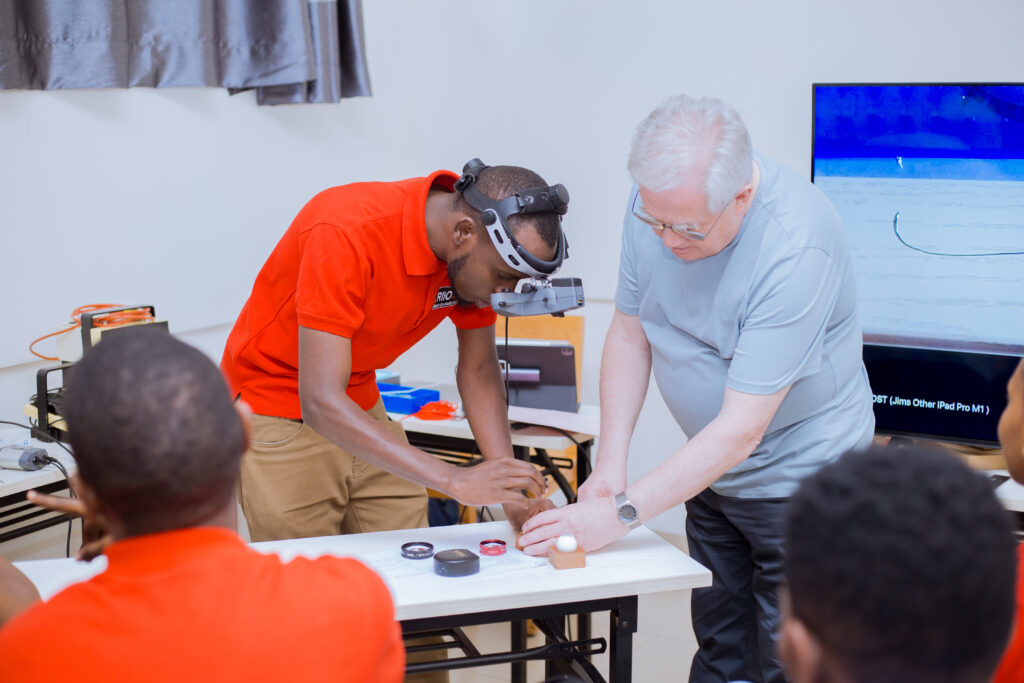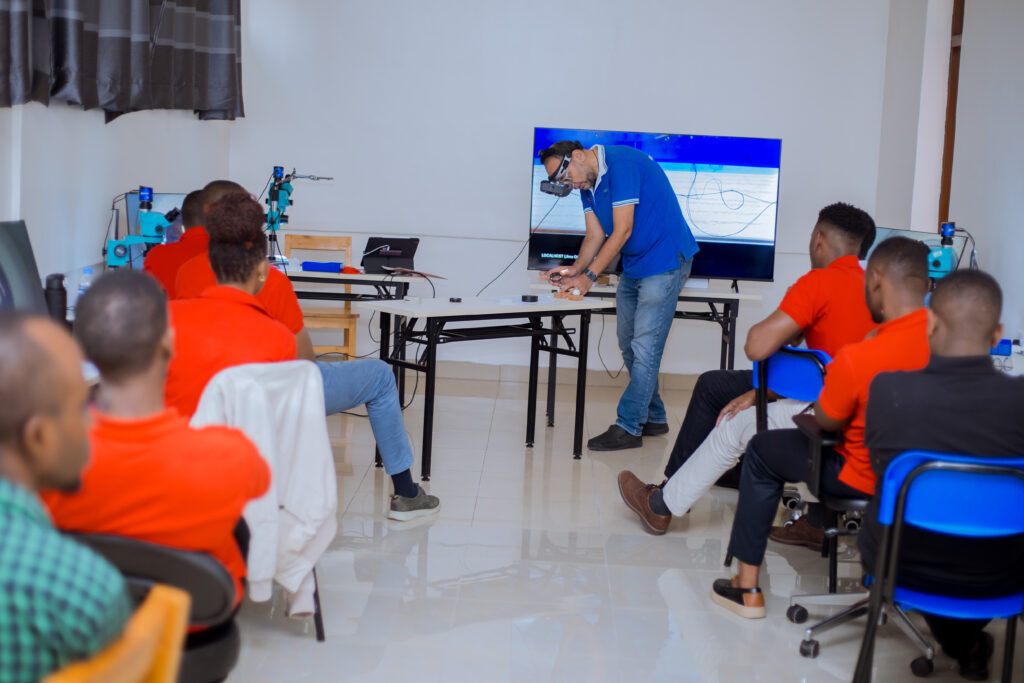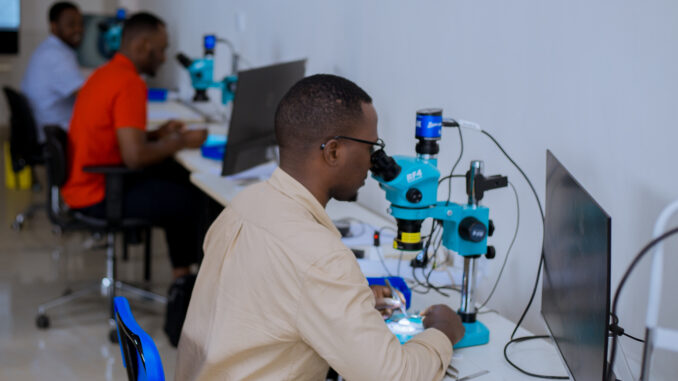
Kabgayi Eye Unit has organized a specialized training program to equip young eye surgeons with the skills needed to manage ophthalmic emergencies, using simulation-based exercises to strengthen their preparedness for urgent cases.
The training took place on Monday, March 9, 2026, at Kabgayi Eye Unit and brought together ophthalmology students from the University of Rwanda (UR). Participants received both theoretical lessons and hands-on practice using patient simulators, enabling them to build confidence and competence before treating real patients.
Dr. Jim Innes, a UK-based ophthalmology consultant currently supporting training programs in Rwanda, said the initiative is designed to prepare young doctors for emergency situations, even though such cases are less common in ophthalmology than in other medical specialties.
“While ophthalmic surgery does not frequently involve emergencies compared to other fields of medicine, it is important for young doctors to know how to respond when urgent cases arise,” he said. “Simulation training allows them to practice safely using animal models or synthetic eyes and prepares them to face real-life situations with greater confidence.”
Dr. Jim added that many eye injuries are caused by accidents, but improved safety measures have significantly reduced their occurrence in many countries.
“When I was a young doctor, we treated many patients with eye injuries resulting from road accidents,” he said. “Today, such cases are less common due to stronger safety measures like mandatory seat belts and the use of protective eyewear.”
He also highlighted the role of technology in improving medical training, noting that demonstrations on screens and recorded surgical procedures help trainees better understand complex techniques.
“Hands-on practice combined with visual demonstrations strengthens both the skills and confidence of young doctors,” he said.
Participants in the training said the program had a positive impact on their professional development.
Marie Reine Dusingize, an ophthalmology student at the University of Rwanda, said the training improved her knowledge and confidence in handling urgent eye conditions.
“The ophthalmic emergencies training was very well organized and helped us achieve our learning goals,” she said. “The knowledge I gained here will be very useful in my future career.”
She explained that simulation practice helped her understand how to react when encountering critical cases.
“Before this training, when I faced such a situation, I would immediately call a senior doctor,” she said. “Now I feel more confident to take the first steps in managing the case before seeking further support.”
Dr. Noel Tharcisse, another trainee ophthalmologist from the University of Rwanda, also emphasized the importance of simulation-based learning.
“Even though we had prior theoretical knowledge, this training strengthened our ability to manage urgent eye injuries effectively,” he said. “Practicing on simulators allows us to build experience before working on real patients, which helps protect patient safety.”
He praised Kabgayi Eye Unit for its commitment to improving medical training and suggested that similar programs should be organized more frequently to strengthen ophthalmic care across the country.
Kabgayi Eye Unit continues to play a key role in strengthening eye care services in Rwanda by providing training opportunities and simulation exercises that allow doctors to practice modern surgical techniques in a safe environment.
Through such initiatives, the hospital aims to enhance the quality of eye care and ensure that patients receive timely and effective treatment, especially in emergency situations.