

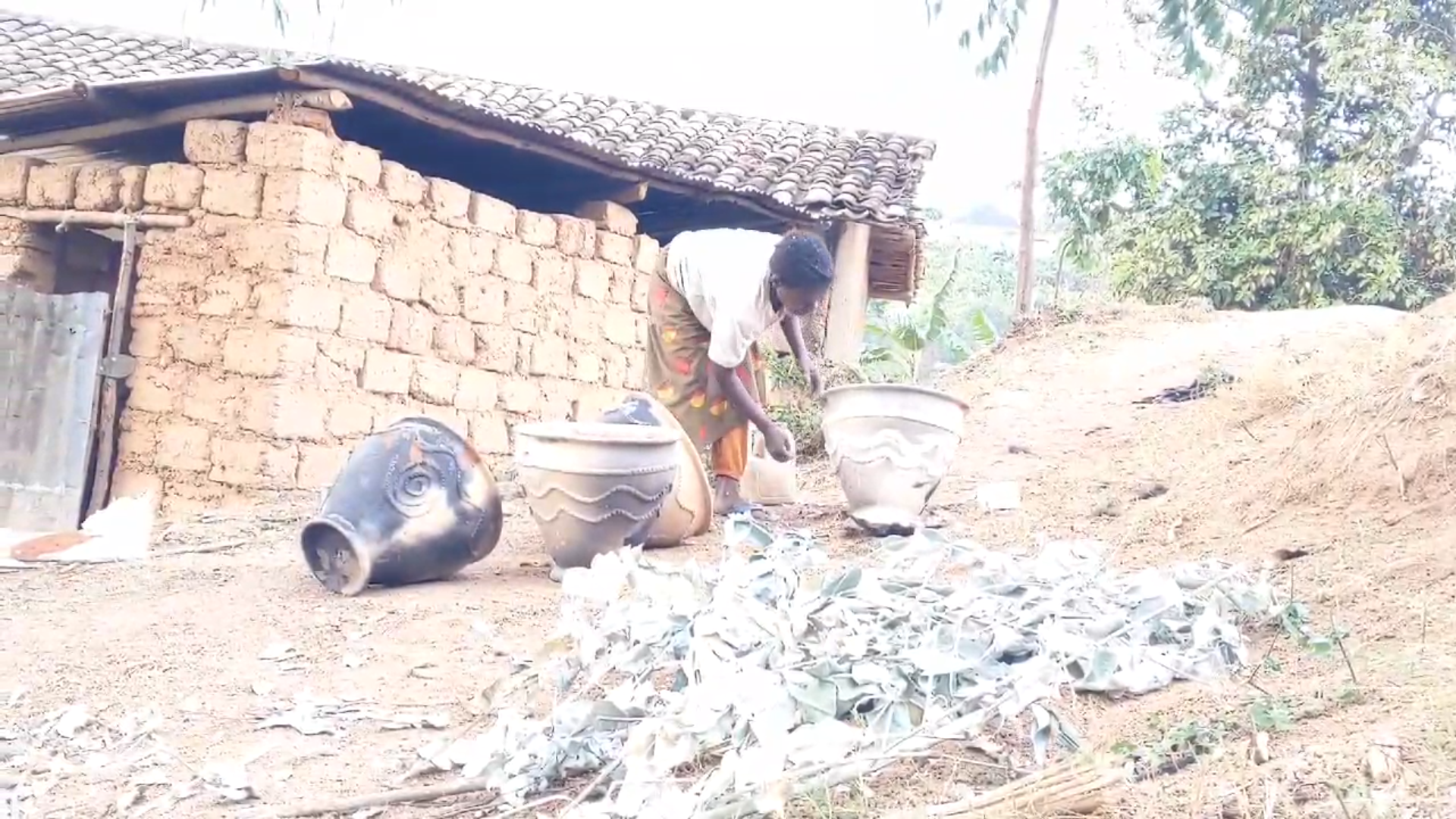
In Rwanda, climate change is increasingly threatening vulnerable populations, with marginalized communities, particularly the Indigenous people, experiencing the harshest effects.
Traditionally, these communities have relied on pottery as their primary source of income.
However, pottery-making depends heavily on access to quality clay, typically found in wetlands and along riverbanks.
In Muhanga, Erratic weather patterns, including heavy rainfall and landslides, have significantly impacted the availability and quality of clay.
Wetlands, once a reliable source of clay, are now being eroded by floods, washing away crucial topsoil and clay deposits.
The unpredictable weather has disrupted the traditional pottery production cycle, making it increasingly difficult for the marginalized people to sustain this craft that used to provides income.

Community members have voiced their concerns about these challenges.
Irasubiza Farida, a reseident in Nyamabuye Sector, Muhanga District, shared her struggles: “As a pottery maker, my family has relied on our craft for generations. However, climate change has made it increasingly difficult to find the clay we need. The heavy rains have washed away our clay sources, and we can no longer produce as much as we used to.”
Similarly, Uzabakurikira Yussuf highlighted the dire economic impact “The impact of climate change on our community is severe. Many families have lost their income due to the decline in pottery sales. The market for our pots has shrunk, pushing us deeper into poverty. We need innovative solutions that can help us shift from pottery to other fields.”
Abijuru Hasura emphasized the need for community collaboration and innovative solutions “We need to work together to find alternative livelihoods, such as agricultural practices that can support both sectors.”
While some members of the community have received support through the Rwandan government’s ‘Gira Inka’ program, some continue to face significant above mentioned challenges.
Muhanga District officials are aware of these challenges and are advocating for alternative income-generating activities to help these communities adapt.
Claude Nshimiyimana, the Executive Secretary of Nyamabuye Sector, encouraged residents to explore new opportunities and leverage existing support systems to enhance self-sufficiency.
“As their traditional work in pottery has been affected by climate change, it is crucial to explore other sustainable avenues for income,” he said.

Similarly, Gilbert Mugabo, the Vice Mayor in charge of Social Affairs, urged these communities to engage in various government programs designed to alleviate poverty.
“We encourage them to participate in all programs, including the Vision Umurenge Program (VUP), to improve their livelihoods,” he stated.
In addition, initiatives are underway to mitigate the impact of climate change.
Rwanda’s govervement and non-governmental organizations have been working on climate adaptation projects, such as the Green Amayaga initiative, which aims to increase forest cover and restore biodiversity in some of the Southern districts.
