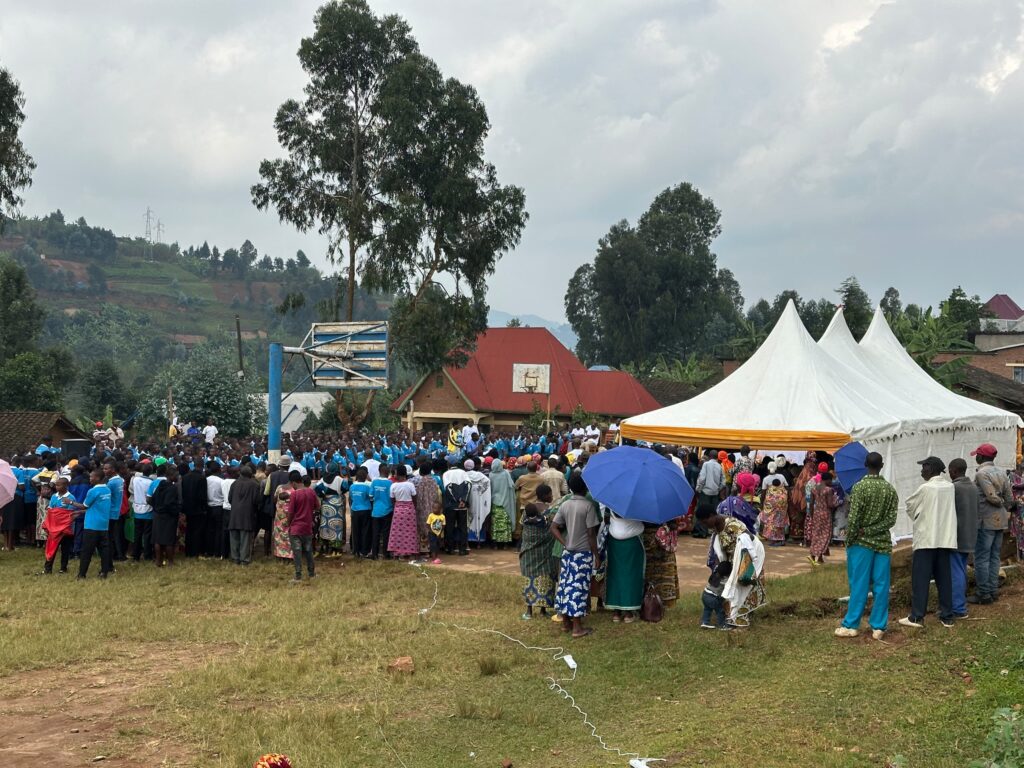
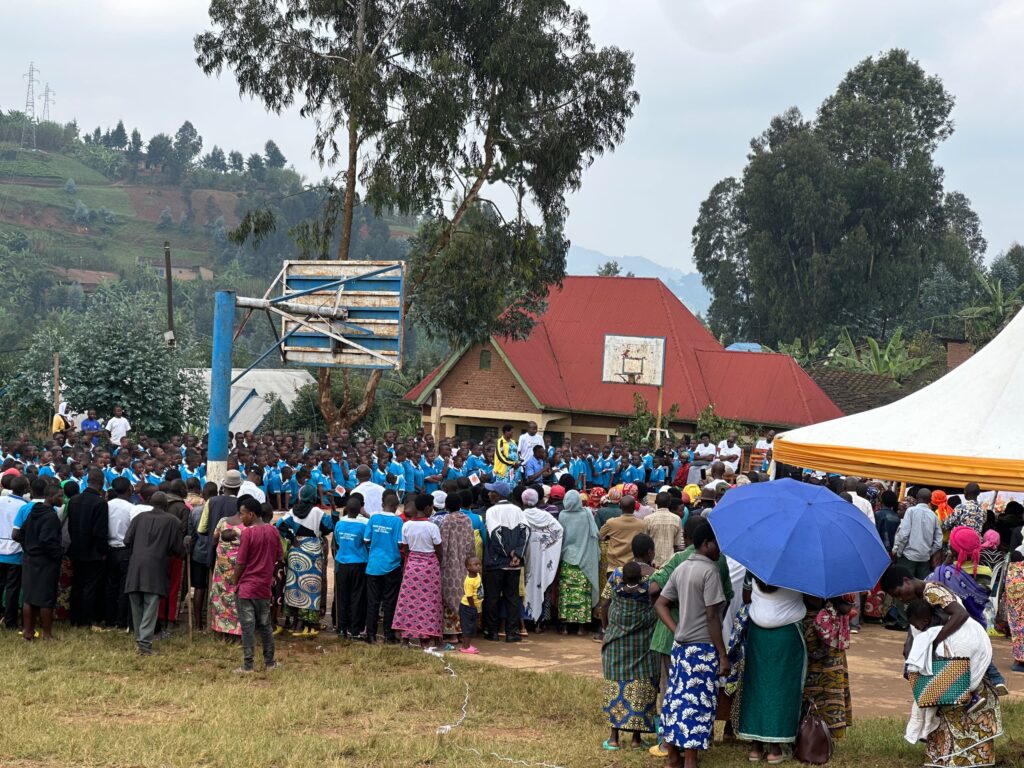
Rutsiro, 25 June 2025 — Caritas Nyundo Gisenyi of Nyundo Diocese has issued a nationwide appeal urging every stakeholder—government, development partners, schools and families—to guarantee children with disabilities equal access to quality education.
Supported by Liliane Fondation through the National Union of Disability Organizations of Rwanda (NUDOR) , their message resonated loudly on Wednesday during the annual We Ring the Bell campaign, held this year at G.S. St Pierre Kivumu in Kivumu Sector, Rutsiro District.
“Children with disabilities have the same right to learn as every other child,” Fr. Jean Paul Rutakisha, General Secretary of Caritas Nyundo, told participants.
“All levels of society—public authorities, partners and especially parents—must play their part.”
Caritas has designated G.S. St Pierre Kivumu as a demonstration school for inclusive education.
Over the past two years the organisation has; built wheelchair-friendly ramps and accessible paths, installed adapted toilets and hand-washing stations, supplied tactile learning aids and large-print materials, and removed other physical and social barriers that once discouraged enrolment.
As a result, the number of learners with disabilities at the school has risen from just three in 2019 to almost 100 today.
Encouraged by this progress, Caritas and NUDOR plan to extend the campaign to neighbouring sectors next year.
Tackling stubborn obstacles
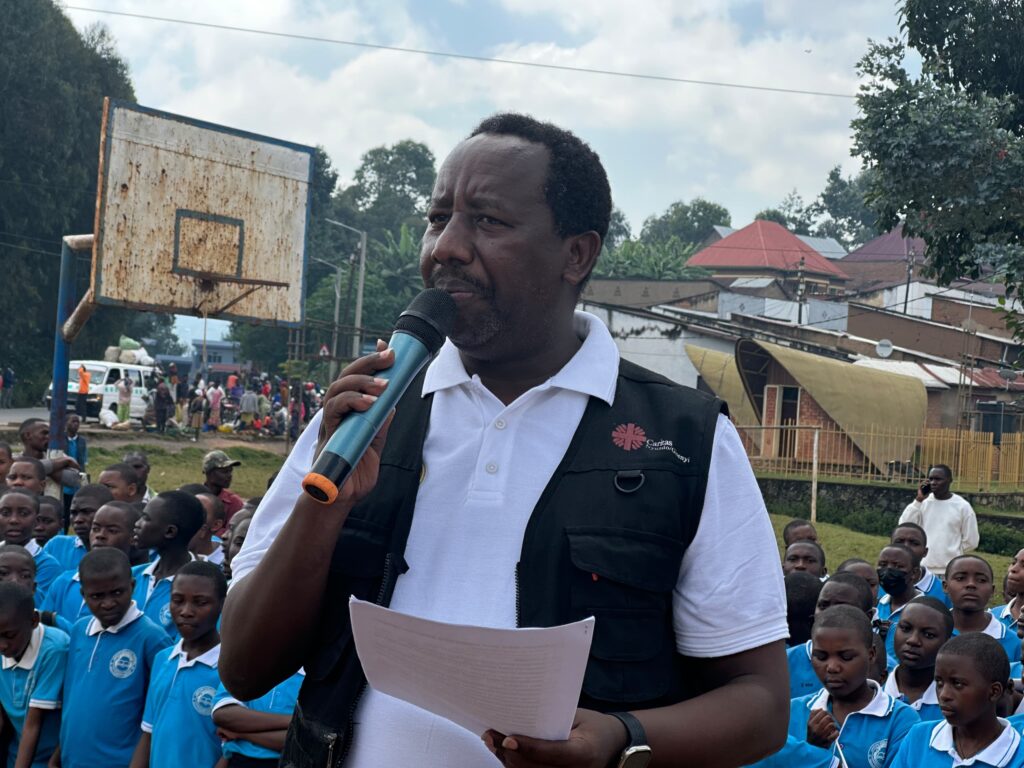
While celebrating the gains, Fr. Rutakisha listed persistent challenges including; parental attitudes, inaccessible housing, charity mind-set, and limited local ownership.
He said, “Some families still hide or undervalue children with disabilities. Steep hills and narrow paths make it difficult for wheelchairs to reach many homes. A lingering belief that only external donors—not local communities—should support persons with disabilities and some grassroots leaders have yet to see inclusion as part of their mandate.”
“Our approach is Community-Based Rehabilitation,” Rutakisha explained. “The broader community should lead; donors should simply reinforce local effort.”
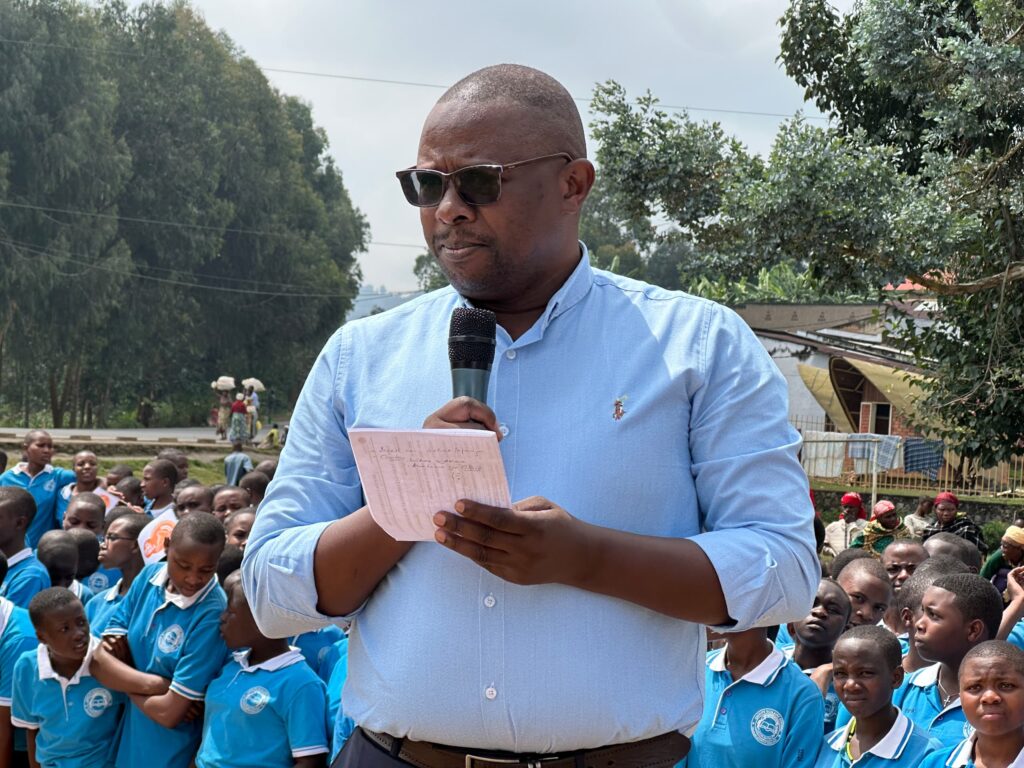
Jean Damascène Nsengiyumva, NUDOR’s Executive Secretary, called Kivumu “a textbook case others can emulate,” citing the dramatic shift in parental attitudes and the surge in school attendance.
Yet one urgent gap remains: “We still lack enough specialised teachers,” he cautioned. “We trust the Government—committed to education for all—will address this shortage.”
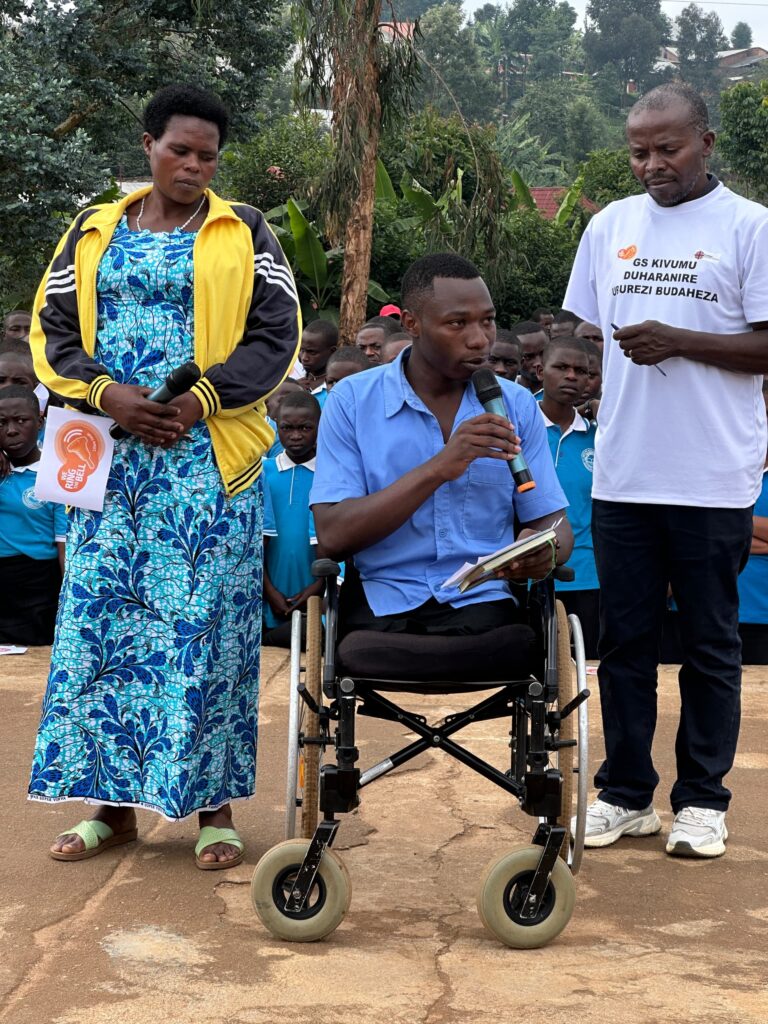
Donath Niyonzima, now in Senior 5 at College Indashyikirwa, knows the stakes personally. Two of his younger siblings have different disabilities.
“My mother used to carry each of us to school separately, sometimes up steep paths,” he recalled. “We repeated grades because other classrooms were inaccessible.”
Caritas intervened by providing wheelchairs, building ramps at school and home, and covering fees. “Today,” he said, “we can reach any classroom, use purpose-built washrooms and learn like everyone else.”
A 2024 survey found more than 14,000 people living with disabilities in Rutsiro District, including 1,175 in Kivumu Sector alone. Caritas and NUDOR argue that investing in accessible infrastructure and shifting mind-sets is not charity but a matter of basic rights.
As the last echo of the school bell fades, their appeal remains clear: Rwanda’s children with disabilities cannot wait. Inclusive education must ring true across the nation—loudly, and for all.