

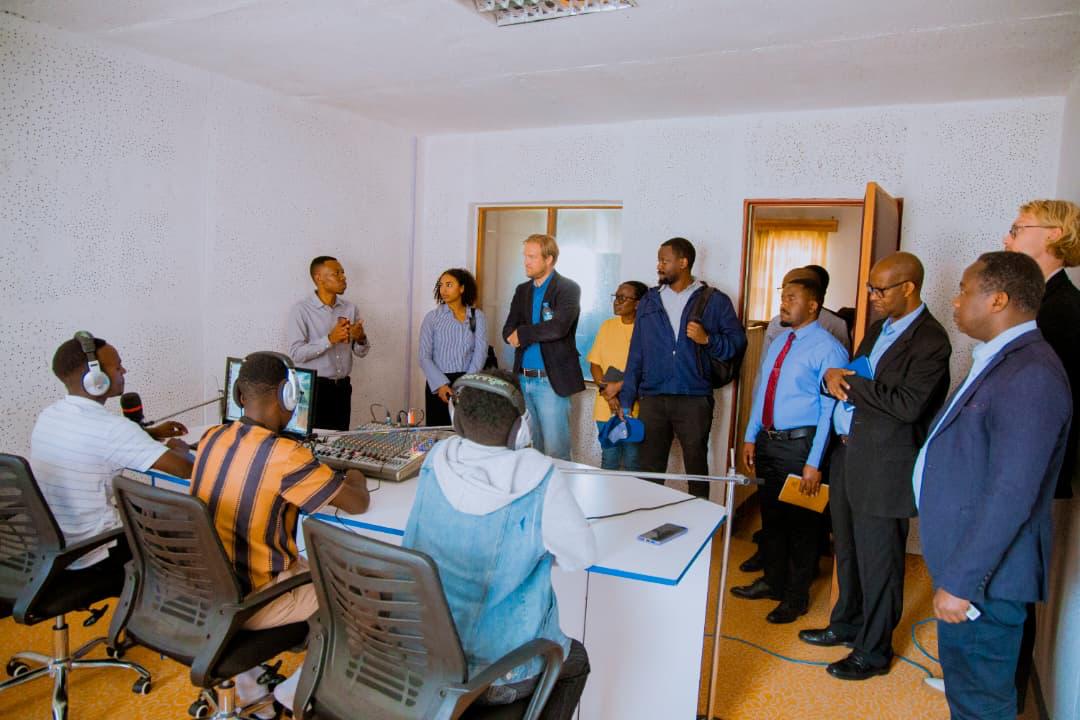
A five-member delegation from the Swedish Embassy in Rwanda, accompanied by a representative from the Fojo Media Institute, visited the Institut Catholique de Kabgayi (ICK) on Monday morning to evaluate the progress of a five-year partnership aimed at strengthening journalism education.
The visit focused on the Faculty of Journalism and Communication Studies, which has been the primary beneficiary of the collaboration between ICK and Fojo, a Swedish organization dedicated to promoting free and independent media globally.
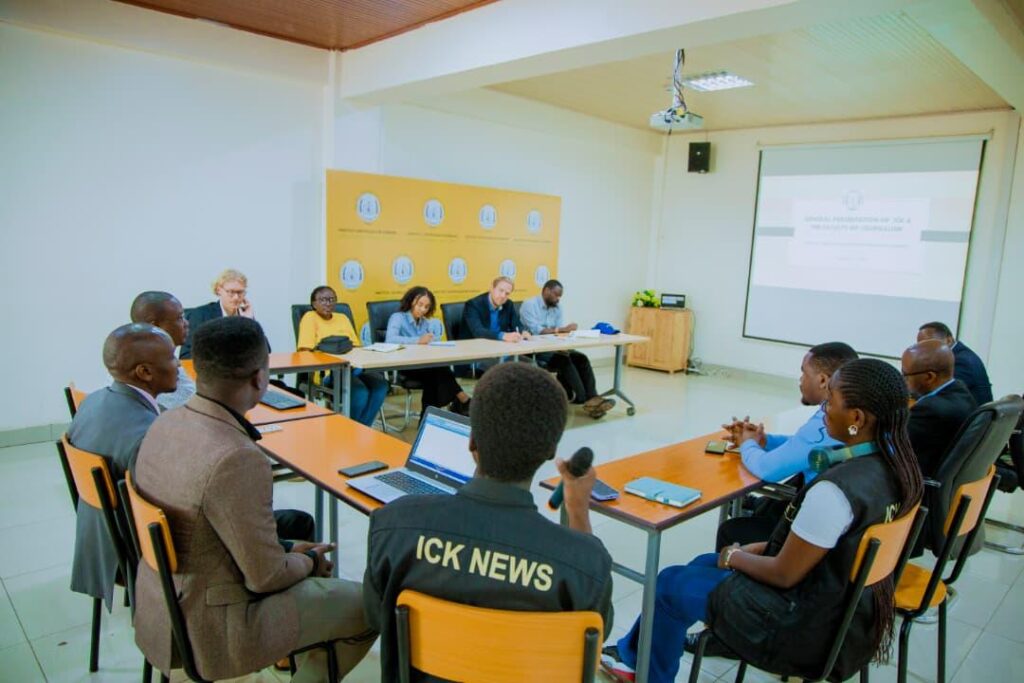
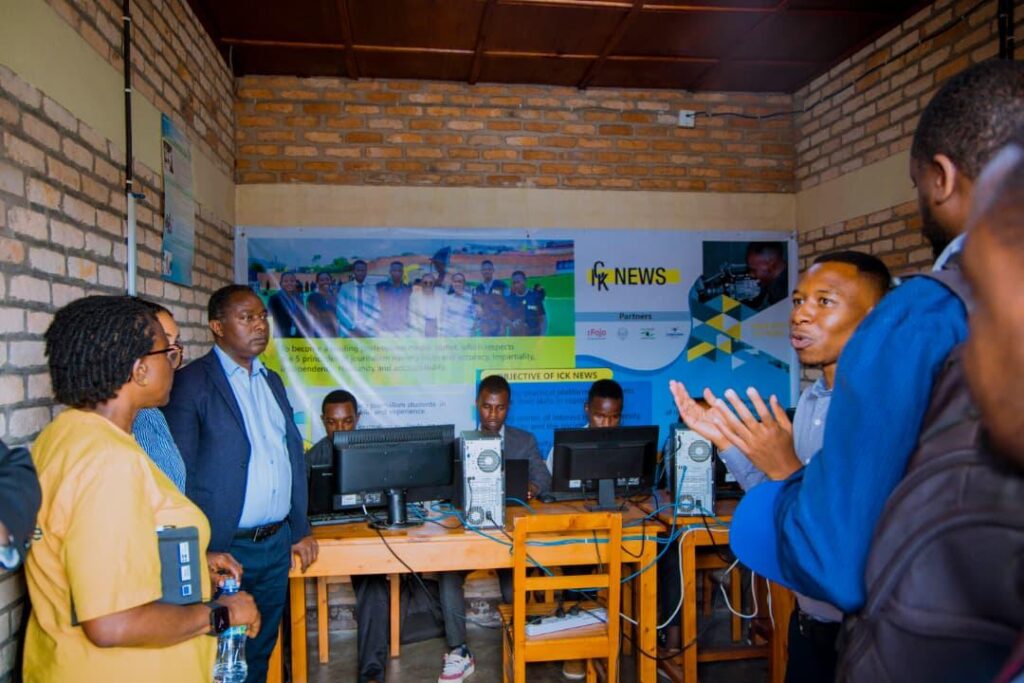
Welcomed by ICK’s senior management and faculty members, the delegation received an overview of ICK’s structure as an independent higher learning institution. Presentations highlighted the faculty’s key achievements, ongoing initiatives, and the tangible results of the partnership.
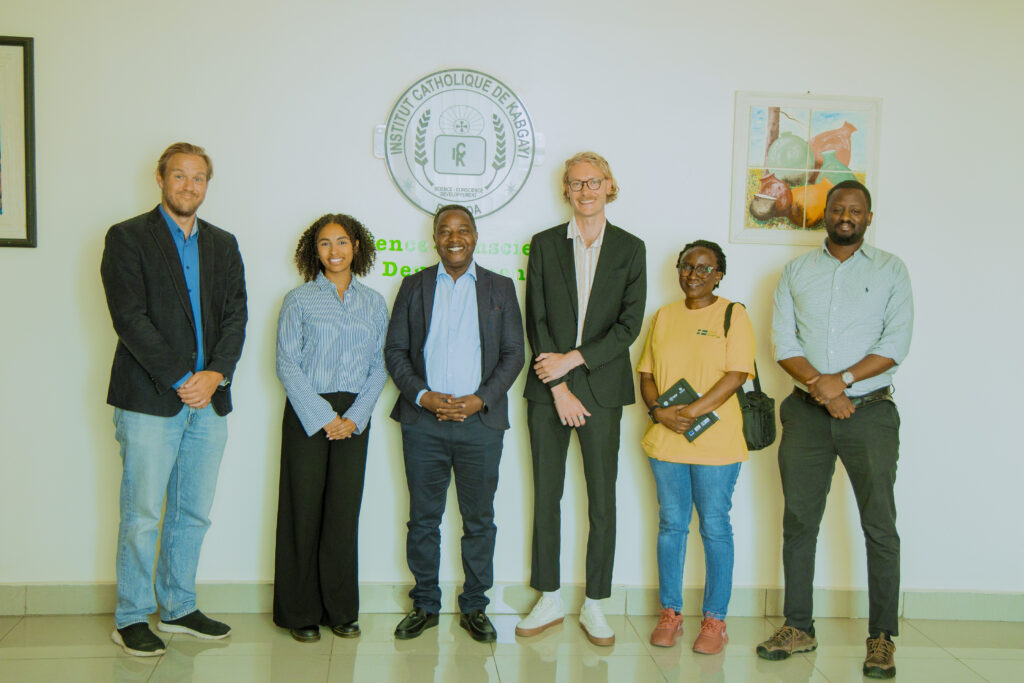
ICK’s Vice-Chancellor, Father. Prof. Fidèle Dushimimana welcomed the delegation
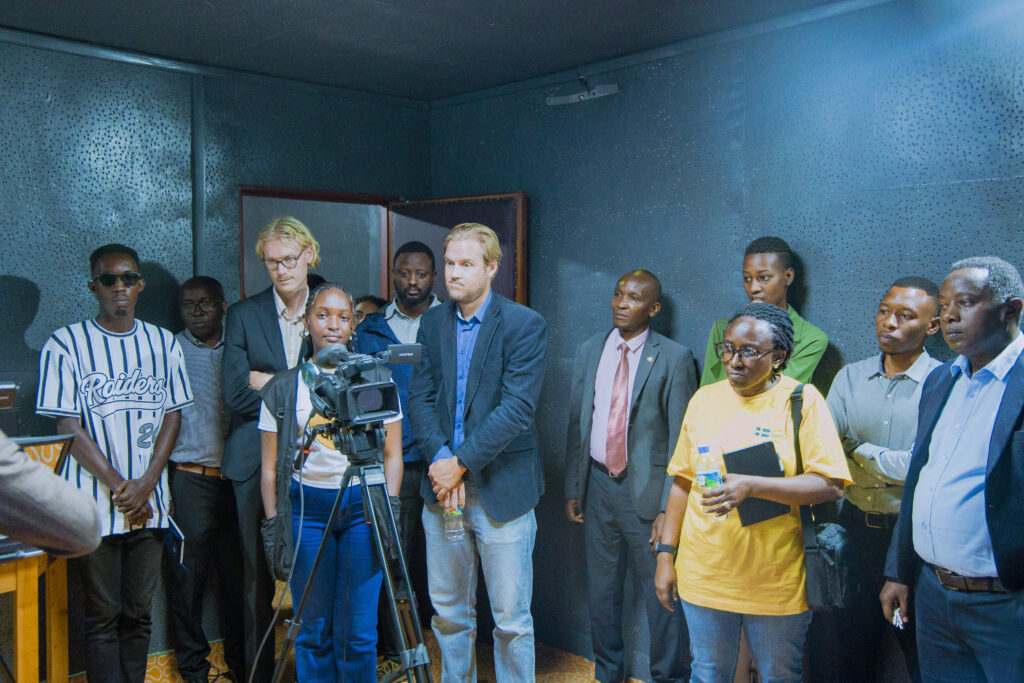
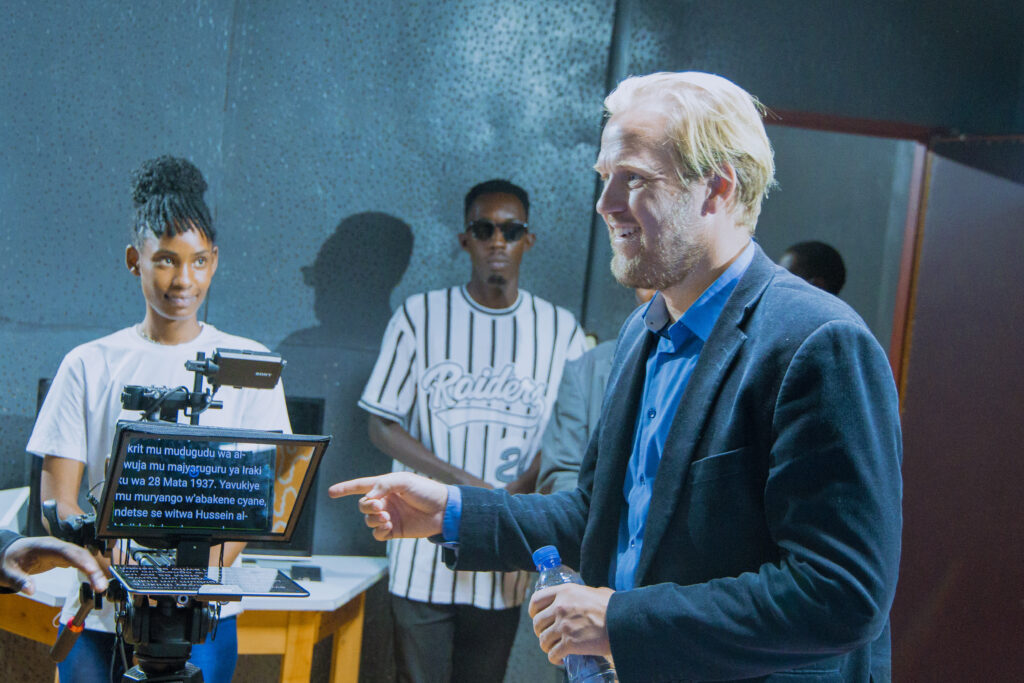
The guests also toured the campus, including the TV, radio, and news production studios, to observe students engaged in hands-on journalism training.
ICK’s Vice-Chancellor, Father. Prof. Fidèle Dushimimana, highlighted the significance of the visit and the impact of the partnership.
“The delegation came to better understand how ICK operates, particularly the Faculty of Journalism and Communication Studies, and to see how the support provided through the Rwanda Media Programme and Fojo has been utilized,” he said.
Father Prof. Dushimimana further stated that the partnership has led to meaningful improvements, especially in student training and internship outcomes.
“The results are visible. Some students are even being recruited before graduation,” he added.
Oskar Karnebäck, representing the Swedish Embassy, acknowledged the positive impact of the partnership while also noting the broader media environment in Rwanda.

Oskar Karnebäck
“We have seen a gradual increase in the area for investigative journalism, it’s a matter of making those small steps and seeing that there is a new area we haven’t investigated before. The trend is positive in Rwanda, maybe we can hope for a higher pace,” he said.
Karnebäck also indicated that the current phase of the collaboration may be approaching its conclusion, pending strategic decisions from the Swedish government.
“We will continue to support Fojo for a little less than a year. Then we wait for a new strategy from our Swedish government,” he added.
Despite the uncertainty beyond the current phase, Fojo expressed optimism about the potential for continued engagement.
Speaking to ICK News, Jonas Nyman, Project Coordinator of the Fojo Program in Rwanda, emphasized the need for continued investment in practical journalism education.
“We always like to put a great emphasis on the practical aspects of journalism because we know that you get a very good theoretical education from your institutions,” Nyman said.

Jonas Nyman
He added that Fojo remains committed to working closely with universities to tackle key challenges in the media sector such as misinformation, self-censorship, and the underdevelopment of investigative journalism.
“We’re planning to continue working a lot with universities and journalism education… We also want to put even more efforts into working directly with journalists to produce the best possible content,” Nyman noted.
Over the past five years, the Fojo Media Institute has supported ICK through funding, equipment, workshops, and professional development for students and faculty alike. The partnership has notably strengthened the faculty’s practical training approach, ensuring that future journalists are equipped with both theoretical knowledge and hands-on experience.


Author: Roger Rwema