


On August 20, 2024, a group of 19 professionals from various universities and higher learning institutions across Rwanda commenced a five-day seminar focused on Internal Quality Assurance (IQA) Systems in Rwanda’s higher education sector.
This event, known as the National Multiplication Training (NMT) 2023/2024, follows an earlier session held in Kigali in November 2023. The current phase is being conducted at Saint André Hotel in Muhanga District.
Under the theme “Internal Quality Assurance (IQA) Systems in Higher Education Institutions (HEIs) in Rwanda,” the seminar aims to enhance the capacity of Quality Assurance Managers and Faculty Leaders ‘including Deans of Faculties and Heads of Departments’ in establishing, assessing, and managing IQA systems within their respective institutions.
Participants hail from a range of institutions, including the University of Rwanda, Rwanda Institute for Conservation Agriculture (RICA), Protestant Institute of Arts and Social Sciences (PIASS), RP-IPRC Kitabi, Institute of Legal Practice and Development (ILPD), RP-IPRC Musanze, Institut Catholique de Kabgayi (ICK), East African University Rwanda, University of Tourism, Technology and Business Studies (UTB), Kepler College, and East African Christian College.
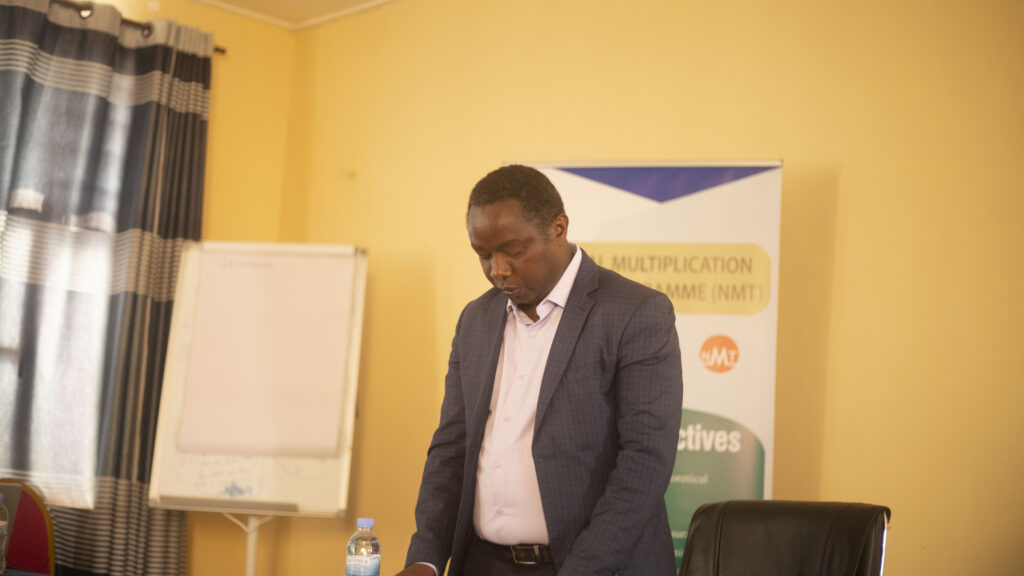
In his opening remarks, Father Prof. Fidèle Dushimimana, the Vice-Chancellor of ICK, expressed deep gratitude to the German collaborators who partnered with ICK and UTB to make the event possible.
He emphasized the significance of the seminar, stating, “Like in other countries, both developed and developing, issues of quality assurance, quality enhancement, and quality improvement are major concerns for our higher learning institutions in Rwanda. With the global trends of globalization and the internationalization of teaching and learning, paying attention on quality assurance in our education system is essential to adapting and transforming the landscape of higher education worldwide.”

Echoing Father Prof. Dushimimana’s sentiments, Mr. John Ntahemuka, Acting Vice-Chancellor of UTB, highlighted the workshop as a critical milestone that will enable institutions to collaboratively advance internal quality assurance systems within Rwanda’s higher education framework.
“As academicians, we know that without quality assurance, we cannot achieve the level of education we aspire to. Ensuring that what we deliver and offer is of the highest quality is crucial for our country’s development,” he remarked.
Both Vice-Chancellors welcomed the NMT initiative, which brings together representatives from various higher learning institutions in Rwanda to discuss, share, and learn best practices in quality assurance. The seminar also addresses challenges faced by academic institutions and explores the way forward.
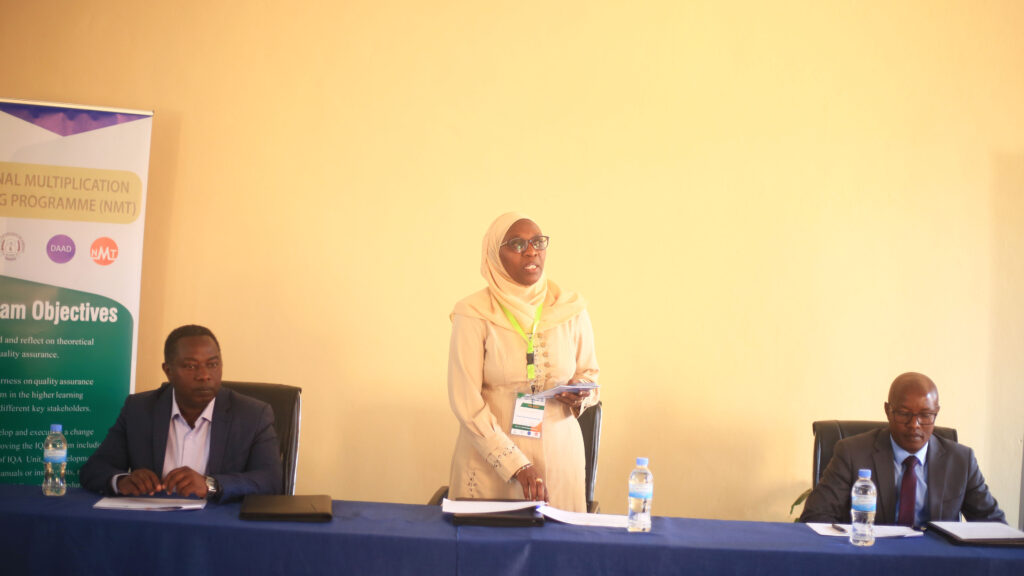
Dr. Liliane Umutesi, the seminar’s Team Leader and a newly appointed Member of Parliament, previously served as Deputy Vice-Chancellor in charge of Academics at UTB. She elaborates the criteria used to select participants, explaining that a meticulous approach was taken, focusing on individuals in key positions within their institutions.
“We prioritized academic registrars, quality assurance managers, as well as Deans and Heads of Departments (HoDs),” she said.
She also noted that the relevance of proposed change projects, aligned with the seminar’s overarching goals, was a key selection factor. “Participants’ extensive experience in the field was also crucial, ensuring a dynamic and knowledgeable cohort capable of making meaningful contributions to the program,” Dr. Umutesi added.
Participants are expected to adapt and apply IQA concepts and curriculum development strategies in their working contexts. They will gain a deeper understanding of IQA, design appropriate systems and procedures, develop and use relevant instruments for IQA assessment, and implement change management projects in their institutions.
During the seminar, participants and trainers will exchange knowledge on various topics, including the development of QA policies, manuals, and instruments; the review of existing QA guidelines and procedures; the content of ASG-QA and HEC requirements for the accreditation of study programs; quality assurance for academic programs; and benchmarking as a QA mechanism, including the case of the Self-Assessment Report (EA). The role of technology in quality assurance will also be discussed.
This workshop is supported by the Dialogue on Innovative Higher Education Strategies (DIES) program, which provides a platform for joint capacity building and international debate among partners from both developed and developing countries. DIES is active in Africa, Southeast Asia, Latin America, and the Middle East.