

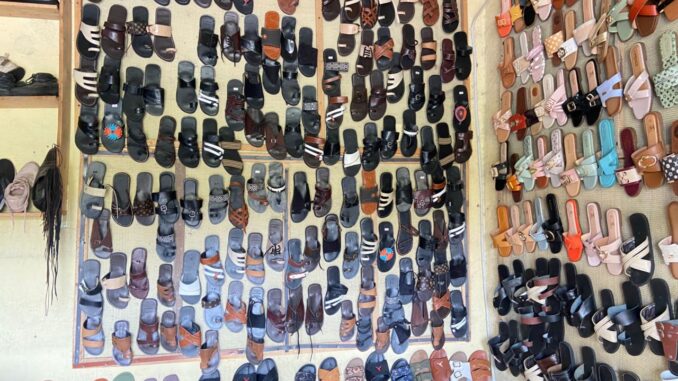
The Made in Rwanda initiative is transforming the business landscape in Muhanga, where local traders are reporting steady growth as demand for homegrown products rises.
Launched in 2015, the government program was designed to strengthen the domestic economy by promoting the production and consumption of locally made goods. It encourages entrepreneurs to improve product quality, adopt modern business practices, and compete more effectively with imported items.
In Muhanga’s modern market, stalls displaying locally crafted dresses, bags, shoes, and accessories are drawing increasing numbers of customers. For many small scale entrepreneurs, the growing preference for Rwandan products has translated into higher incomes and renewed confidence in their craft.
Uwera Claudette, a dressmaker based in Muhanga, says the initiative changed her perception of her own work. She recalls a time when she doubted whether locally made clothing could attract buyers. Today, she runs a workshop that produces dresses and bags sold across different parts of the country. Through her business, she also provides employment opportunities to young people in the community.
Shoemaker Muneza Jean de Dieu shares a similar story. He says he started with basic shoe production but has since expanded to create various designs for both men and women. By collaborating with fellow artisans, he has become part of a growing network of local producers committed to advancing the Made in Rwanda agenda.
However, challenges persist. Raymond Murenzi, Chief Executive Officer of the Rwanda Standards Board, acknowledges that some consumers still perceive locally made goods as inferior to imported products. He emphasizes the need to change such mindsets while ensuring that producers consistently meet high quality standards to compete both locally and internationally.
Despite these hurdles, the Made in Rwanda initiative remains a cornerstone of Rwanda’s economic development strategy. In Muhanga, it is not only fueling business expansion but also fostering pride in locally produced goods and strengthening livelihoods within the community.
Author: Fabrice Mazimpaka