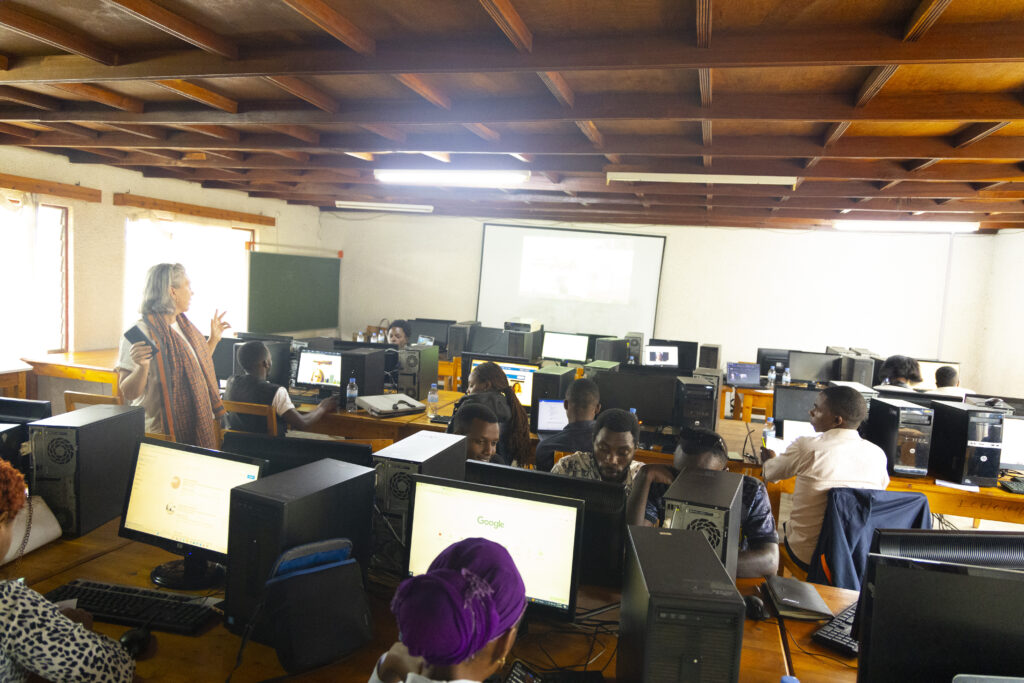
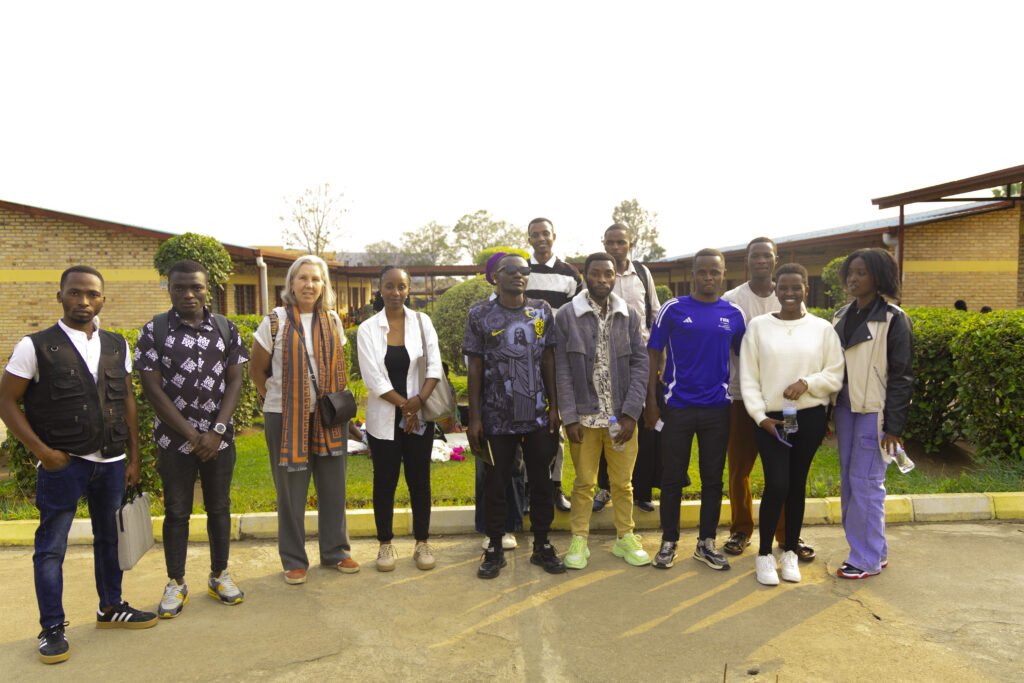
Journalism students from the Institut Catholique de Kabgayi (ICK) and the University of Rwanda (UR) came together today at the ICK campus for a one-day training dedicated to fact-checking and the responsible use of artificial intelligence (AI) tools in reporting.
The workshop, led by Annelie Frank, Project Manager for Fojo Media Institute in Rwanda, addressed one of the profession’s most pressing challenges, the rapid spread of misinformation. In an era where social media often blurs the line between fact and fiction, Frank said journalists must be “frontline defenders of truth.”
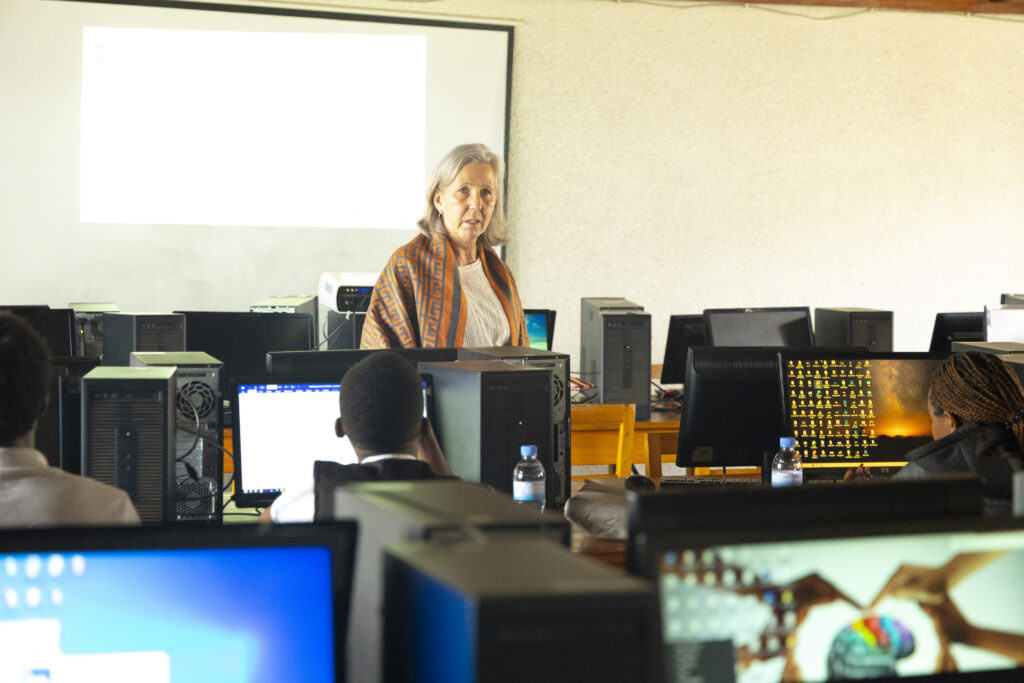
“Fake news today is being used to score political points, manipulate public opinion, and discredit opponents,” she told ICK News.
“When people are constantly fed misinformation, it breeds mistrust, confusion, and division. That’s why training young professionals in fact-checking and AI use is essential for the future of journalism.”
For students, the issue is far from theoretical. Many see journalism as a daily battle against falsehoods, public skepticism, and the constant pressure to publish quickly.
Uwamahoro Denyse , An year one ICK Public Relations student said the training reinforced the centrality of verification in their craft.

“Fact-checking is the backbone of journalism,” Uwamahoro said. “If we don’t verify our facts, we risk becoming part of the problem. Every story we tell shapes public opinion, so we must get it right.”
UR student Fabrice Ishimwe noted that misinformation often originates outside professional newsrooms. “Most fake news comes from individuals who aren’t trained journalists but present themselves as credible sources,” he said.
“Even among journalists, financial or political pressures can cause lapses. It’s our responsibility to apply what we’ve learned today to protect the integrity of our profession.” She added.
Recent studies highlight the urgency of such initiatives. A 2024 UNESCO report found that 67% of Rwandans had encountered false or misleading news online, with Facebook, TikTok, and X (formerly Twitter) named as the most common sources. Globally, data from the International Fact-Checking Network (IFCN) shows fake news spreads up to six times faster than factual reports—especially when it reinforces biases or fuels outrage.