

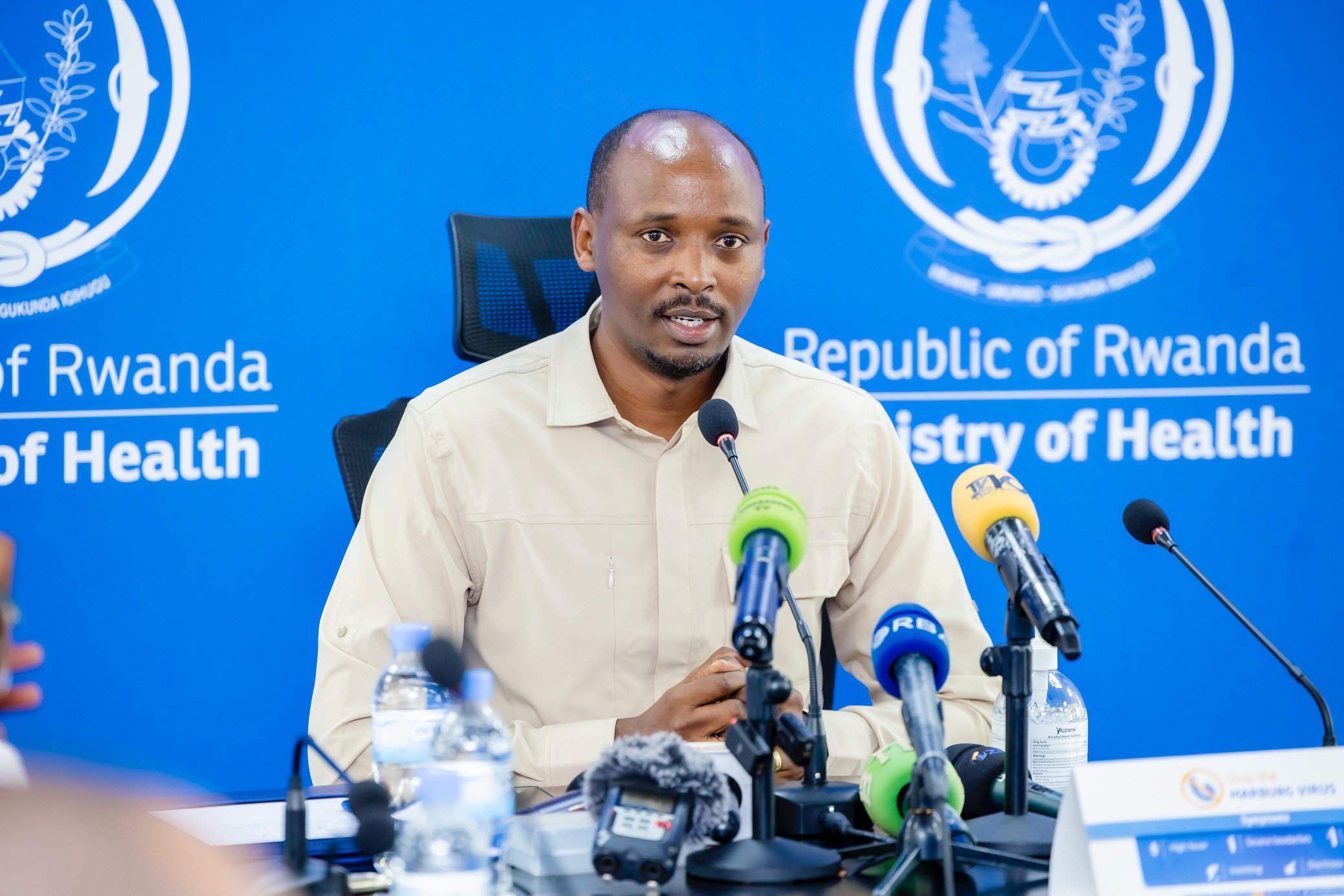
In a press conference held on November 4, 2024, Rwanda’s Minister of Health emphasized the need for caution in sexual relations for individuals who have recovered from the Marburg virus.
The press conference focused on providing an overview of the Marburg virus situation in Rwanda and the progress of measures being implemented to combat it.
During the discussion, Dr. Sanzimana revealed that even after recovery, the virus can persist in certain bodily fluids, including breast milk, semen, and in the eyes, despite being undetectable in blood tests.
He warned that survivors can still transmit the virus through sexual intercourse, urging them to avoid unprotected sex until medical tests confirm the virus has been eliminated from their bodies.
“They are therefore advised to take precautions and avoid unprotected sex until tests confirm the virus has been fully cleared from their system.,” he stated.
The minister also provided insights into the virus’s origins in Rwanda, noting that recent investigations traced the outbreak to fruit bats, with the first confirmed case linked to a mine where these bats are present. To mitigate risk, a barrier has been constructed in the mine to separate working areas from bat habitats.
Additionally, a medical team is monitoring the health of mine workers daily, with similar measures implemented in other mines.
Dr. Sanzimana cautioned against culling bats, stating, “Killing the bats could lead to other problems because they play a significant role in controlling diseases spread by mosquitoes and other pests, as well as in agriculture through pollination.”
He highlighted that these bats can harbor the Marburg virus and can spread it twice a year coinciding with their breeding season.
A team of experts has now been established to investigate other possible locations where these bats might harbor the Marburg virus.
As of now, two patients are under care and are reported to be recovering well.