

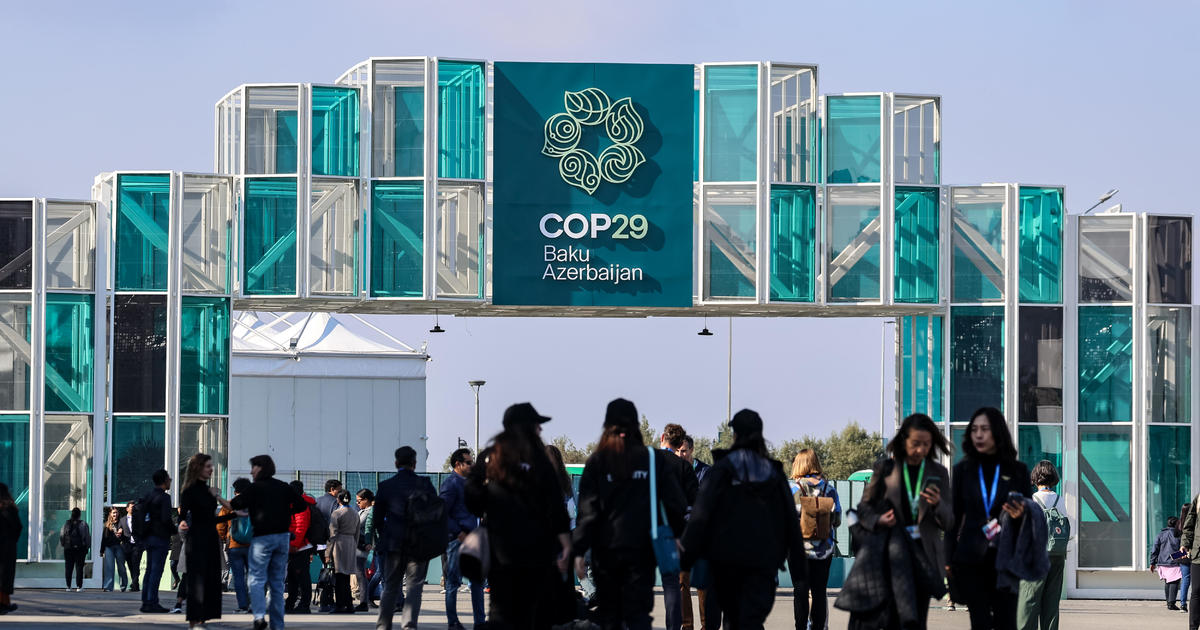
A group of former leaders and climate experts said the annual UN COP climate talks were no longer fit for purpose and needed to be reformed, publishing a critical open letter mid-way through what has so far been a fractious summit.
Signatories of the letter include Ban Ki-Moon, the former UN Secretary-General, Christiana Figueres, the former head of the UN Framework Convention on Climate Change (UNFCCC), and Mary Robinson, the former President of Ireland.
But while the authors of this letter recognise these achievements, they feel that the slow-moving COP process is “no longer fit for purpose” in dealing with a fast-moving climate crisis.
“Its current structure simply cannot deliver the change at exponential speed and scale, which is essential to ensure a safe climate landing for humanity,” said its signatories.
The authors are concerned that the current COP process is not able to make change happen quickly or able to force countries to act.
At last year’s COP28 meeting in Dubai all countries agreed to “transition away from fossil fuels in energy systems.”
But 12 months later emissions of warming gases have increased once again, up by almost 1%.
Scientists say these emissions need to fall by 42% by the end of this decade to avoid a global temperature rise in excess of 1.5°C, considered the threshold to far more dangerous impacts than we are seeing at present.
The appeal comes as nearly 200 countries are gathered in Baku, Azerbaijan with a primary goal of agreeing a new target for how much money needs to be provided to help developing countries adapt to climate change and recover from destructive weather.
However, the signatories of the letter express concern over the host countries’ ability and willingness to combat the rising global temperatures.
At the start of COP29, the country’s president, Ilham Aliyev, defended Azerbaijan’s current exports of gas and plans to expand production by a third in the next decade. “it’s a gift of God,” he told an audience in Baku.
“Every natural resource whether it’s oil, gas, wind, sun, gold, silver, copper, all that are natural resources,” he said.
“And countries should not be blamed for having them and should not be blamed for bringing these resources to the market because the market needs them, the people need them.”
The authors of the letter are also concerned by the selection process for hosting COPs. Azerbaijan followed on from another major oil producer, the United Arab Emirates, which held the conference in Dubai last year.
The authors say that host countries “must demonstrate their high level of ambition to uphold the goals of the Paris agreement.”
Just before the latest conference started, a secret recording showed the chief executive of Azerbaijan’s COP29 team, Elnur Soltanov, discussing investment opportunities in the state oil and gas company with a man posing as a potential investor.
This raised further concerns about the host country’s commitment to addressing the environmental crisis.
The UN has yet to comment on the letter.
At the conference in Baku, negotiators from small island states were particularly concerned about any attempt to change the nature of the COP, where all countries are equal.
They worry that if decisions are made among the big emitters at forums such as the G20 group of richer nations, their small island voice will be excluded.
“We’re not a part of those discussions,” said Micahi Robertson who’s an adviser to the Alliance of Small Island States at these talks.
While COP meetings have made some progress over the years, experts warn that the current pace of action is insufficient to address the climate crisis.
The Paris Agreement signed in 2015, outlines a long-term plan to rein in rising temperatures, as countries strive to keep that rise under 1.5°C this century.
They have also agreed to transition away from fossil fuels in energy systems, and to treble renewable power by 2030.