

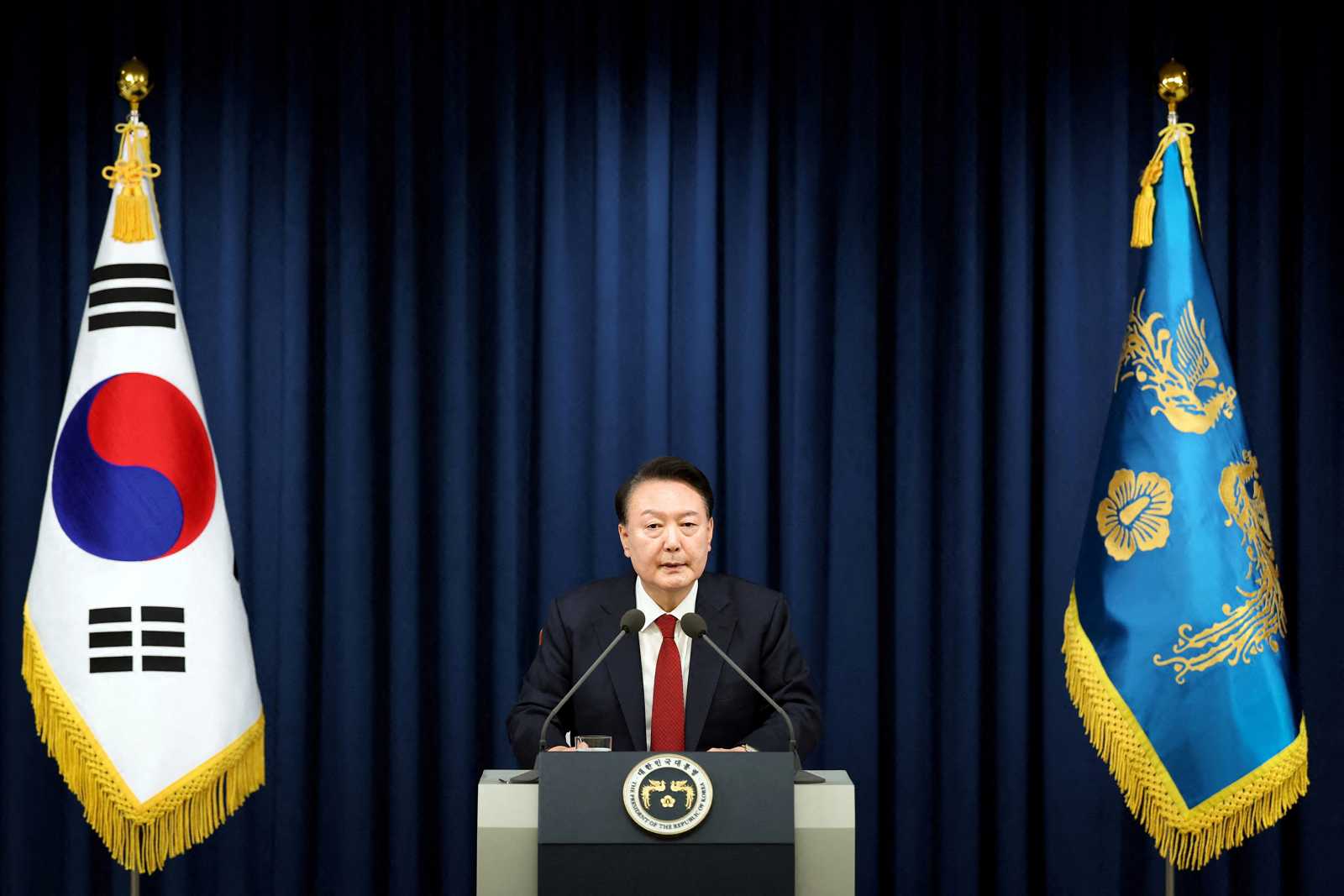
South Korea’s political landscape has been as turbulent as its dramatic transition from dictatorship to democracy.
Over the years, its presidents have played pivotal roles in shaping the nation, often at great personal or political cost. The recent political tensions surrounding President Yoon Suk-yeol evoke echoes of the nation’s troubled relationship with executive power.
Early Presidents: Struggles for Stability
Syngman Rhee, South Korea’s first president (1948–1960), was a symbol of the fight for independence but was eventually overthrown amid accusations of authoritarianism and electoral fraud.
His successor, Yun Bo-seon, met a similar fate, forced out during a military coup in just two years.
The military Era
The military era began with Park Chung-hee (1962–1979), who spearheaded South Korea’s rapid economic development but ruled with an iron fist until his assassination.
His successor, Choi Kyu-hah, lasted barely a year before being ousted in yet another coup, paving the way for Chun Doo-hwan, whose presidency was marked by brutal repression, including the infamous Gwangju Massacre.
After his presidency, Chun faced the full force of justice, sentenced to death (later commuted).
Democratic Reform: Hope and scandal
Roh Tae-woo followed Chun, bringing a more moderate approach but faced his own downfall, sentenced to 22 years in prison for corruption.
The 1990s brought Kim Young-sam, the first civilian president after decades of military rule, who sought accountability by convicting his predecessors. However, the challenges of leadership persisted.
Kim Dae-jung’s presidency marked a turning point for peace and reconciliation. Imprisoned and sentenced to death earlier in his career, he became a symbol of resilience, earning the Nobel Peace Prize for his efforts to foster North-South Korean relations.
21st Century: A Mixed Legacy
The 21st century saw South Korea grappling with corruption scandals and impeachment.
Roh Moo-hyun (2003–2008) faced impeachment and post-presidential investigations that culminated in his tragic suicide.
Lee Myung-bak (2008–2013) and Park Geun-hye (2013–2016) both ended their presidencies with corruption convictions, serving lengthy prison terms.
Moon Jae-in, the immediate predecessor of Yoon Suk-yeol, stands out as a leader who avoided legal or political scandal post-presidency, focusing instead on stabilizing inter-Korean relations.
Today, President Yoon faces a political maelstrom akin to those of his predecessors.
His recent imposition of martial law, though short-lived, underscores the fragile balance of power between the executive and legislative branches.
The National Assembly’s decisive vote to rescind the decree reflects the strength of South Korea’s democratic institutions but also its lingering political divides.