

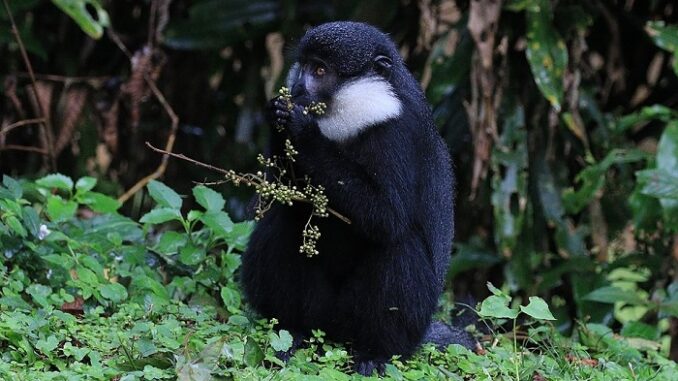
Some residents of Rangiro Sector in Nyamasheke District say they are increasingly concerned about losses caused by wild animals that leave Nyungwe National Park during the night and early morning, destroying their crops.
Residents, particularly those living in Banda and Gakenke cells, say the number of animals coming out of the park has been increasing over time, damaging crops that serve as their main source of food and income, including school fees for their children.
Innocent Nkundimana said he cultivated crops on a large piece of land, only for them to be destroyed before harvest.
“I planted maize and sugarcane, but I did not harvest anything because they were destroyed by baboons and porcupines before they matured. When someone farms, they expect a harvest that will help support their livelihood,” he said.
Nkundimana added that these losses discourage some residents from farming because they are no longer confident they will reap the benefits of their efforts.
Julie Bayavuge said the situation has pushed some families into food insecurity because their crops are destroyed before harvest.
“There are times when we run out of food despite having cultivated crops. The animals destroy them before harvest, making life very difficult for us,” she said.
He explained that porcupines mainly damage sweet potatoes and beans, while baboons heavily target sugarcane, banana plantations, and other crops.
Bayavuge added that beyond food shortages, the presence of these animals also affects children’s education, as some students are afraid to pass near the forest when going to or returning from school.
Jean Claude Muteta, Executive Secretary of Rangiro Sector, said park authorities have held discussions with residents and agreed to promote crops that are less attractive to wildlife, with support from local authorities.
“We are planning to replace crops that are frequently destroyed by wild animals with buffer-zone crops such as tea. Following discussions between residents and park management, community members expressed satisfaction with this decision,” he said.
Protais Niyigaba, Director of Nyungwe National Park, said fencing the park’s boundaries is not a practical solution because wild animals can overcome most barriers. Instead, he emphasized the importance of collaboration with local communities.
“There must be cooperation with residents in addressing this problem because there is no fence that these animals cannot cross,” he said.
Niyigaba added that there are compensation mechanisms for residents whose crops are damaged by animals from the park. He explained that when such incidents occur, the affected crops are assessed through an official valuation process to determine the extent of the damage. Based on the assessment, residents are compensated according to the value of the crops or losses incurred.
Although Nyungwe National Park plays a significant role in environmental conservation and contributes to Rwanda’s economy, a gap remains between what neighboring communities expect from the park and what park management says is realistically achievable.
Author: Marie Jeanne Musabyemungu