


Once known mainly as a transit stop between Kigali and the Southern Province, Muhanga has undergone a remarkable transformation over the past decade. What was formerly Gitarama has evolved into a vibrant secondary city, expanding its infrastructure, business landscape and economic influence across the region.
New paved roads have replaced dusty community paths. Informal markets have transitioned into clean and organized commercial centers, while modern multi-storey buildings are rising where single-level structures once stood. Today, Muhanga proudly stands as a fast-growing satellite city with an economic identity of its own.
Accommodation facilities also reflect this growth. Though still fewer compared to major cities, hotels like Splendid Hotel continue to welcome travelers looking for reliable services within the bustling town. Budget-friendly choices such as Lucerna Kabgayi Hotel and Saint-André have become go-to options for visitors seeking convenience without high costs.
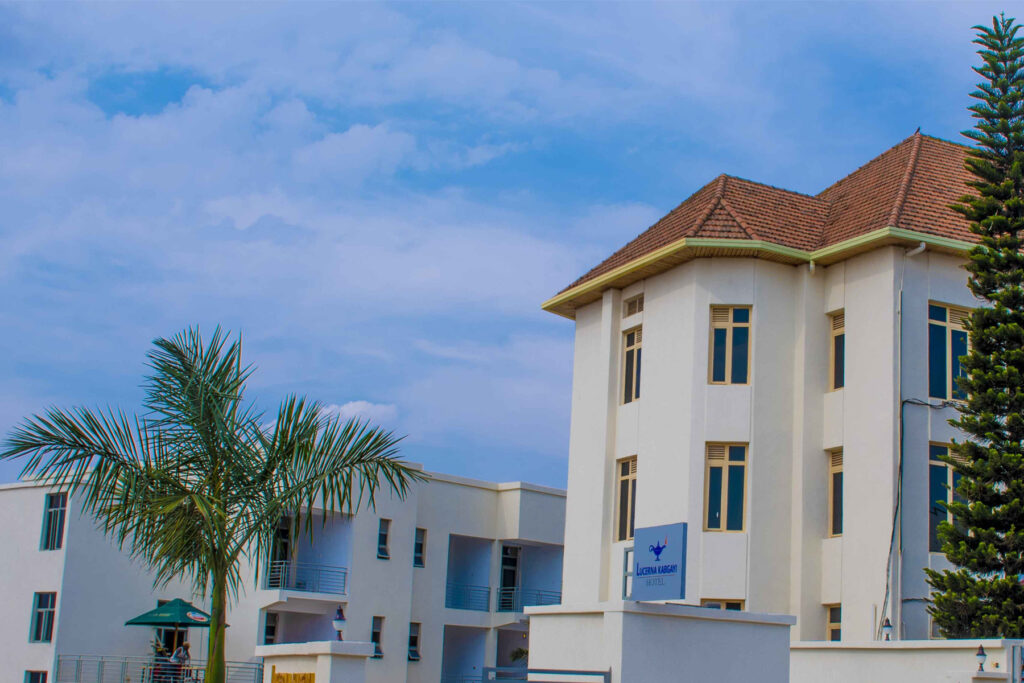
Local traders acknowledge the positive change. “I enjoy spending time in the hotels around Muhanga because they offer comfort, good service, and a calm environment. I always feel relaxed when I visit,” said Abdallah Mbabariye, a local resident.
Development felt in daily life
Residents say they now experience development not as a distant government project, but in their everyday routines. Businesses that once opened only on market days now operate daily, serving a growing customer base. Young graduates are finding jobs in new offices, banks and industries. Public transport runs smoothly thanks to improved roads and roundabouts.
Industries, especially agro-processing, construction materials and retail distribution, have become key economic drivers. They continue to create jobs and strengthen local production. For motorcycle taxi operators, the changes are tangible.
“I feel the development of Muhanga in a very positive way,” said motorcyclist Kubwimana Calixte. “New buildings, improved infrastructure, and cleaner streets make my work easier and safer. I am proud to see Muhanga becoming modern and organized.”
Modern commercial complexes have introduced better business environments with secure storage and increased customer flow. Traders in construction materials also benefit from new industries nearby.
“The cement factory in Muhanga has made our work easier and more profitable,” explained Jean Claude Kubwimana, a construction materials dealer. “Transport costs are lower, and customers are served faster.”
A regional economic connector
Muhanga’s impact extends far beyond its borders. Residents from Kamonyi commute to Muhanga for work and commerce, while farmers from Ruhango and Nyanza rely on the city as a trade gateway by selling milk, cassava, bananas and other produce at competitive prices.
To the west, Ngororero and Karongi depend on Muhanga as a key transit point, boosting hospitality and transport services. This strategic positioning has solidified Muhanga’s role as an economic engine linking rural production to national markets.
Access to services has also improved greatly, more health facilities, financial institutions and schools now serve the growing population. Market vendors praise the stability of permanent shops, while students find part-time jobs more easily in town.
Driven by smart urban planning
Local officials emphasize that this progress is guided by national development priorities and proper planning.
“We have set clear goals for the next phase of development,” said Nshimiyimana Jean Claude, Executive Secretary of Nyamabuye Sector. These goals include expanding paved roads and drainage systems, completing the city master plan, and attracting more agro-processing and light manufacturing industries.
Plans also highlight affordable housing, access to finance for local traders, better green public spaces and stronger transport links with neighboring districts.
Business thriving in better infrastructure
With the completion of modern markets, many residents have upgraded their businesses. Tailors’ cooperatives, shop owners and service providers now operate in cleaner, more organized facilities.
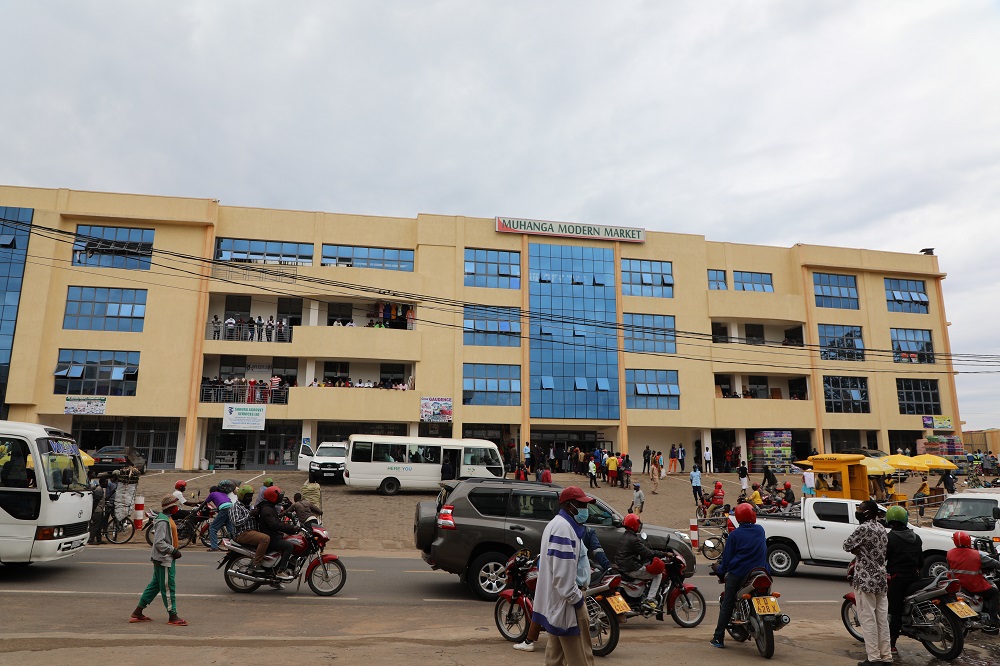
“Improved roads and modern market spaces have increased customers and reduced transport challenges,” said trader Rukazabyuma Emile. “We are happy with the new infrastructure and the growth it brings.”
Works to upgrade Nyabisindu Market are also ongoing, signaling continued investment in the city’s commercial network.
As evening lights illuminate its skyline, Muhanga showcases a new chapter—one filled with confidence and ambition. The once-quiet town is now a rising regional center shaping opportunities for its people and neighbors.
With steady growth, strategic planning and a motivated community, Muhanga is well on its way to becoming a clean, competitive and economically strong secondary city—one that inspires the next generation to build on its success.
Author: Innocent Ndagijimana