


President Paul Kagame has urged Rwandans and Africans to rise, fight for their rights, and reject lives lived under oppression, lies, and dependency.
His remarks were delivered on Monday, April 7, 2025, during a solemn event at the Kigali Genocide Memorial in Gisozi — the final resting place for over 250,000 victims of the 1994 Genocide against the Tutsi, exhumed from districts across Kigali.
Speaking at the starting of the national mourning week and the 100-day commemoration marking the 31st of commemorating the 1994 Genocide against the Tutsi, the Head of State called on citizens to uphold dignity, resilience, and self-determination.
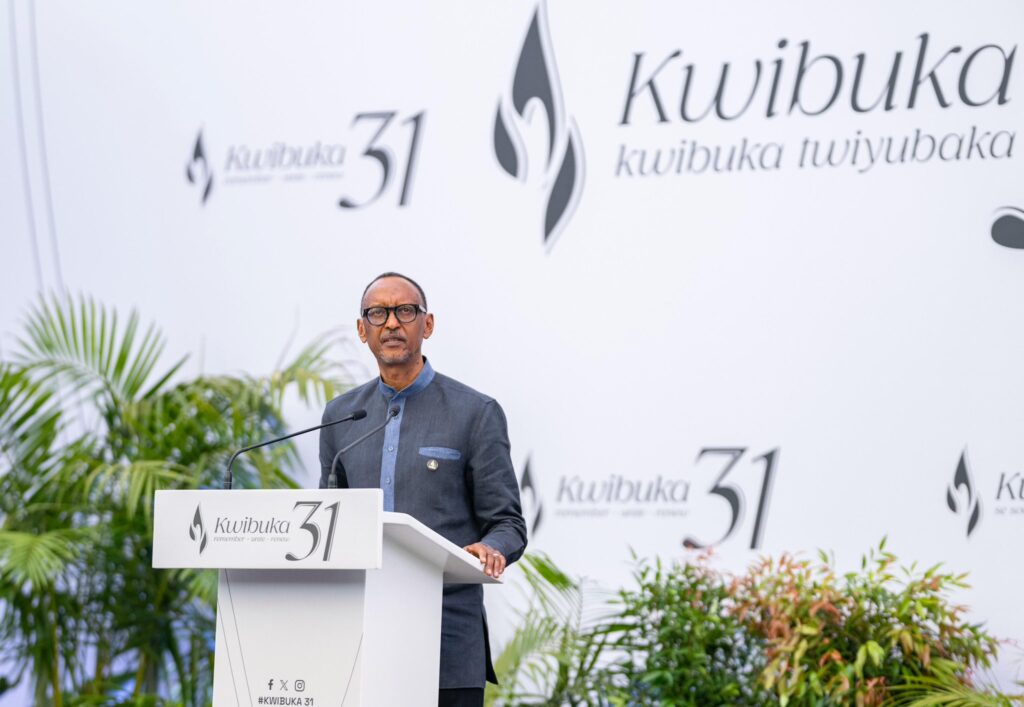
“To live a life of lies, of pretense, and owe your life to somebody else is to be dead already,” Kagame declared. “So why don’t I die fighting? You Rwandans, why don’t you die fighting instead of dying like flies? Why?”
President Kagame’s message, though rooted in Rwanda’s experience, extended beyond its borders.
He addressed it to the wider African population, many of whom, he said, continue to endure dehumanizing conditions, accept mistreatment, and plead for survival in systems that strip them of their rights and dignity.
Referencing a personal story, Kagame recounted how a friend once asked how he managed the dark past and the cruel present. He responded that the two are inseparable and must be dealt with them as such.
“You have to deal with the cruel present knowing that it is very much related to the dark past. They are inseparable. So for us, we have a choice to make,” he said.
The president emphasized that living a dignified life requires courage and the willingness to fight for what is right.
“I can’t beg to live. I can’t beg anybody.” He affirmed. “We will fight. If I am defeated, so be it. But there is always a chance, a significant chance that if you stand up and fight, you will live. And you will have lived a dignified life. That you deserve, that anybody deserves.”
In a sharp rebuke of foreign influence and internal betrayal, Kagame criticized some African leaders for serving external interests while neglecting their own populations.
He condemned the global hypocrisy that punishes Rwanda for defending its sovereignty, even as corrupt leaders elsewhere are rewarded.
He also raised the issue of Congolese refugees in Rwanda, challenging the international narrative that blames Rwanda for regional instability.
“Thousands of Congolese refugees live here, yet the World sees that as Rwanda’s problem,” he said. “These refugees are welcomed in Western countries as Congolese. But when Rwanda offers them refuge, it becomes our fault.”
Kagame further criticized so-called “expert groups” that produce reports on the Democratic Republic of Congo, accusing them of spreading misinformation about Rwanda’s role in the conflict.
He questioned how outsiders could claim superior understanding of the region, some of whom, he noted, were involved in Rwanda’s darkest chapter.
“These are people who go around, experts who are supposed to know better our situation than ourselves. And the ones who lead those groups are the very people connected with this history I’m talking about,” Kagame noted.
Closing his address, President Kagame issued a resolute warning. “You give us nothing, then come and hit us with everything. This is a World caught between the darkness of the past and the cruel of present. But what didn’t kill us and finish us over the past 31 years, has hardened us, prepared us for the bad things that will always come anytime. We will not die without a fight like last time.”
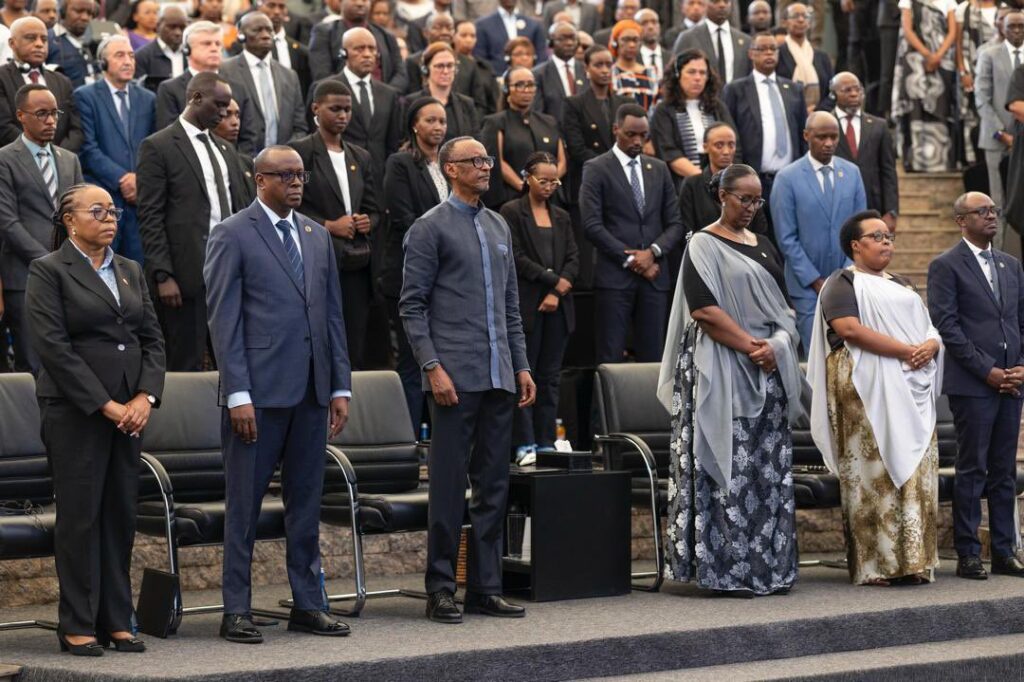
President Kagame’s message comes at a time when relations between Rwanda and certain Western countries—particularly Belgium, its former colonial ruler—remain strained due to ongoing security challenges in the eastern Democratic Republic of Congo (DRC).
Some of these countries, notably Belgium, have called for Rwanda to be sanctioned, accusing it of involvement in the conflict unfolding in eastern Congo—allegations that Rwanda has consistently denied. Instead, Rwanda has criticized these nations for what it describes as hypocrisy and arrogance, accusing them of prioritizing their own interests over genuine efforts to address the root causes of the crisis in the DRC.