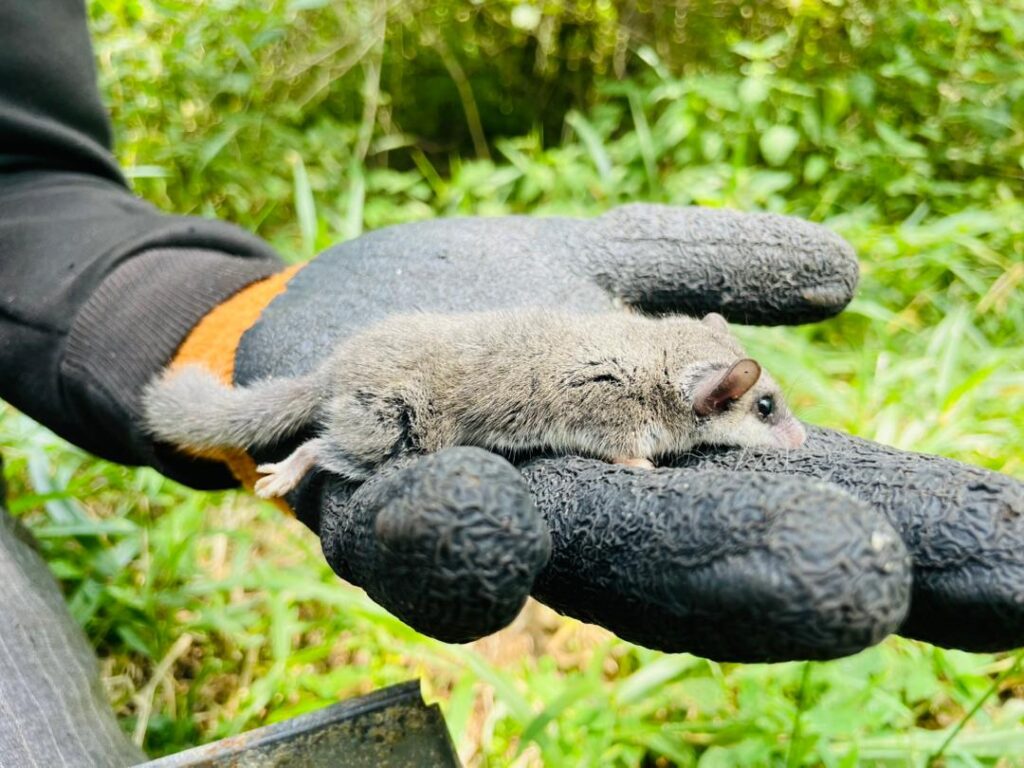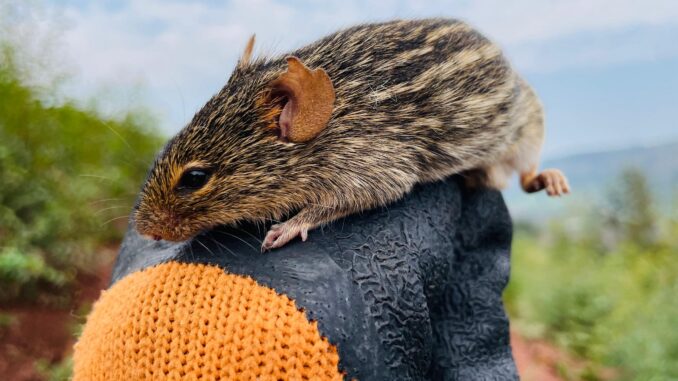
In many parts of Rwanda, rats are widely viewed as destructive pests because of the damage they cause to crops and stored food. Farmers interviewed for this story say rodents frequently attack beans, maize, and other staple crops, forcing households to rely on traps or chemical poison to protect their harvests.
However, scientists say this perception reflects only a small part of the ecological picture. According to biodiversity researcher Pacifique Niyodushima of the University of Rwanda, many rodent species play important roles in maintaining healthy ecosystems.
“Not all rats are pests,” Niyodushima explained in an interview. “Many species live in natural environments where they contribute to soil fertility and support other wildlife.”
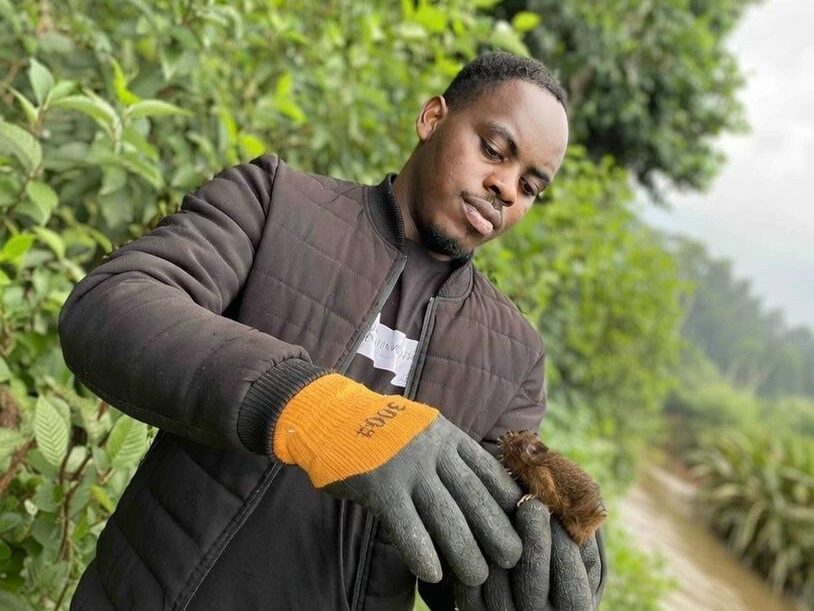
Pacifique Niyodushima, a biodiversity researcher fom University of Rwanda
This article aims to challenge the common perception of rats as purely destructive pests by highlighting their ecological importance in Rwanda’s ecosystems such as their roles in seed dispersal, soil aeration, and as a food source for predators.
At the same time, it does not ignore the serious challenges they pose, including crop damage, food contamination, and economic losses for farmers. By presenting both perspectives, the article seeks to balance the thesis that rodents are essential components of biodiversity with the antithesis that their unchecked presence can significantly harm livelihoods ultimately encouraging a more nuanced and informed understanding of their role.
Only a few rodent species cause most damage
Scientific research conducted in Rwanda indicates that the country hosts around 73 rodent species, most of which live in forests and natural habitats rather than farms or homes. The figure comes from rodent studies conducted by Professor Méthode Majyambere, a specialist in rodent ecology at the University of Rwanda. According to ecological research on rodent pests, only a small number of species are commonly associated with human settlements worldwide. The most widespread among them are the black rat (Rattus rattus) and the brown rat (Rattus norvegicus), both known for invading homes and agricultural fields (Meerburg et al., 2009, Ecology of Rodent Pests).
These species are known as commensal rodents, meaning they live alongside humans and benefit from human food sources. In contrast, most rodent species found in Rwanda inhabit forests, wetlands, and grasslands, where they rarely interact with agriculture but play roles in ecosystem functioning (Kingdon et al., The Mammals of Africa).
Farmers experience the damage firsthand
Despite these ecological benefits, farmers say rodent infestations can cause serious crop losses.
Marie Jeanne Nyiramugisha, a farmer interviewed for this story, said rats frequently attack her bean crops by cutting the stems of young plants, causing them to dry before producing beans.
Agricultural specialists confirm that rodents can damage crops both in fields and in storage facilities.
According to crop protection experts from the Rwanda Agriculture and Animal Resources Development Board (RAB), pest infestations can significantly reduce crop yields when they are not properly managed.
RAB crop protection scientist Dr Athanase Hategekimana has noted in agricultural advisory reports that pest attacks can lead to substantial yield losses depending on crop stage and infestation intensity.
Dr Hategekimana added that “rodents can cause damage in storage facilities or warehouses. For instance, when harvests are stored in sacks, pests can enter, move from one sack to another, and destroy the produce inside.In addition to feeding on grains or other stored products, they also contaminate them with their waste. You may find droppings in the produce, making it unacceptable for consumers to buy.They are very destructive. In other words, they cause both qualitative and quantitative losses.”
Health and environmental risks
Rodents living near homes can also contribute to the spread of diseases.
Social health expert Dieudonné Mugiraneza explained that rats moving between plants can transfer plant pathogens from one location to another. He also warned that chemical poisons used to kill rats can create additional environmental risks.
“When poisoned rats move around before dying, the chemicals can spread to other animals or contaminate areas where people live,” Mugiraneza said.
Wildlife conservation organizations such as the International Union for Conservation of Nature (IUCN) have also cautioned that rodenticides can harm predators that feed on poisoned rodents.
Habitat loss increases human–rodent conflict
Scientists say increasing encounters between rodents and farmers may also be linked to environmental change.
According to Niyodushima, deforestation and land clearing reduce natural habitats and food sources for wildlife.
“When habitats are destroyed, animals are forced to move,” he explained.
Conservation studies in the Albertine Rift region have similarly shown that habitat fragmentation can increase wildlife movement into agricultural areas (Wildlife Conservation Society research).
A crucial link in the food chain
Rodents occupy a central position in many food webs.
According to global biodiversity research, rodents make up approximately 40% of all mammal species worldwide, making them one of the most diverse groups of mammals (Wilson & Reeder, Mammal Species of the World). Their high reproductive rate also makes them a reliable food source for many predators.
“Many animals depend on rodents for survival,” Niyodushima said, noting that birds of prey, snakes, and small carnivorous mammals frequently rely on them as a primary food source. Ecologists warn that a major decline in rodent populations could therefore affect predator populations and disrupt ecological balance.
In that sense, researchers take rats as ‘Ecosystem engineers’, meaning they have a major impact on the ecosystem and particularity exist in the conservation of rodents in Rwanda.
Telephore NGOGA Conservation Policy Analyst Rwanda Development Board (RDB) (Chief Tourism Office) affirms this: “In Rwanda, we acknowledge that rodents, often called ‘ecosystem engineers’, perform a dual role that necessitates a nuanced management approach instead of a universal conservation strategy.” NGOGA mentioned the ecological importance, the challenge and the legal framework of rodents in Rwanda.
1. Ecological importance: The ‘engineers’
In our natural ecosystems, such as Volcanoes National Park and Nyungwe National Park, wild rodents play a crucial role. They are essential for seed dispersal and soil aeration. By burying seeds and creating tunnels, they help facilitate forest regeneration and maintain the health of the flora in the Highlands. In this context, they are protected as an integral part of our biodiversity.
2. The Challenge: Urban and Agricultural Systems
It is important to distinguish these wild roles from the challenges posed in human-dominated landscapes. In Rwanda, rodents are not regarded as domestic animals. When they move into urban areas or agricultural zones, their activities can become destructive. They can impact food security by consuming or damaging crops and stored harvests and they can also affect public health by acting as vectors for various diseases.
3. Usage in Research
Rodents are used in laboratory experiments in Rwanda to enhance scientific and medical knowledge, but this currently occurs on a relatively small, controlled scale compared to other countries.
4. Legal Framework and Conservation
Although Rwanda does not have a specific conservation program for rodents, their management is governed by Law N° 064/2021 of 14/10/2021, which addresses biological diversity. This law provides a comprehensive framework for wildlife management. It allows for the protection of rodents in areas where they are ecologically beneficial, while also establishing the legal basis for managing populations and controlling pests when they pose a threat to public health or the economy.
In summary, ‘’our uniqueness lies in context-based management. We protect the ‘ecosystem engineer’ in the wild to ensure forest health while actively managing their populations in human habitats to safeguard our citizens and our economy.’’ Said Mr NGOGA.
Conservation and Tourism
Healthy ecosystems are also important for Rwanda’s tourism sector.
The Rwanda Development Board (RDB) emphasizes that conservation plays a central role in the country’s tourism strategy. Rwanda’s tourism sector is deeply rooted in the health of its ecosystems, which form a mutually beneficial relationship where conservation attracts visitors and tourism revenue sustains environmental protection. By prioritizing green growth, Rwanda uses its rich biodiversity not only to drive a high-end ecotourism model but also to create jobs, support rural communities, and strengthen national identity through natural heritage like mountain gorillas and protected forests.
This approach extends to wildlife management, including rodents, which are recognized as important “ecosystem engineers” in natural habitats for their role in soil health and forest regeneration, while being carefully controlled in urban and agricultural settings to protect public health and food security. Overall, Rwanda’s strategy emphasizes balanced, context-based conservation that aligns environmental sustainability with economic development and community well-being.
In the interview with Mr Télesphore Ngoga, he summarized this in four points:
1. The Mutualistic Bond: Conservation and Tourism
The relationship between Rwanda’s ecosystems and our tourism sector is one of mutual dependence. We view conservation as the provider, offering unique biodiversity and pristine landscapes that attract visitors from around the world. In return, tourism serves as the funder, supplying the sustainable capital needed to manage, protect, and restore these landscapes.
This relationship is not one-sided; it operates as a closed-loop system where every tourist’s visit directly supports the salaries of rangers, the monitoring of endangered species, and the reforestation of our wildlife corridors. By treating our parks as valuable assets, we ensure that conservation is not seen as a charity, but rather as a competitive and self-sustaining industry.
2. A Foundation for Sustainable Development
In Rwanda, green growth is our sole growth strategy. Healthy ecosystems are the foundation of our sustainable development. Our high-end ecotourism model depends on the integrity of our natural capital. By protecting our biodiversity, we are not only saving species but also securing thousands of green jobs and boosting rural economies. This approach ensures that Rwanda continues to be a global leader in the green economy.
3. Heritage, Identity, and the Living Classroom
Our biodiversity, natural heritage, is the vital essence of our cultural heritage. As an example, the Mountain Gorilla and our ancient montane forests are integral to the Rwandan story, just like our history and traditions. Beyond their cultural significance, these parks serve as educational resources. We are nurturing a generation of “Conservation Champions” who view our ecosystems not as confined spaces, but as rich sources of knowledge, pride, and national identity.
4. Conducive Coexistence: The Human-Wildlife Bond
The true success of our model lies in building a positive coexistence between humans and wildlife. We believe that biodiversity cannot flourish if the communities living alongside it do not thrive as well. Our commitment to human-wildlife coexistence is supported by our Revenue Sharing Program, which allocates 10% of all tourism park fees directly to community projects such as schools, health centres, and clean-water initiatives.
We have shifted away from a ‘conflict’ mindset. Through innovative fencing solutions and community-led conservation efforts, we have established a partnership between wildlife and humans that promotes mutual prosperity. When a community sees a new clinic funded by the park, wildlife is no longer perceived as a threat; instead, it is viewed as a protected neighbour and a shared asset.
Rwanda’s national parks including Nyungwe, Volcanoes, Akagera and Gishwati-Mukura protect ecosystems that support diverse wildlife species and attract international visitors.
The Bottom Line
Rats in Rwanda present a complex ecological reality.
A small number of rodent species living near humans can damage crops and threaten food security. At the same time, many other rodent species perform essential ecological roles such as soil improvement, seed dispersal and supporting predator populations.
Scientists and conservation experts say the challenge is therefore not eliminating rats entirely, but managing them responsibly. Evidence increasingly supports science-based rodent management strategies that protect agricultural production while preserving the ecological functions these animals provide.