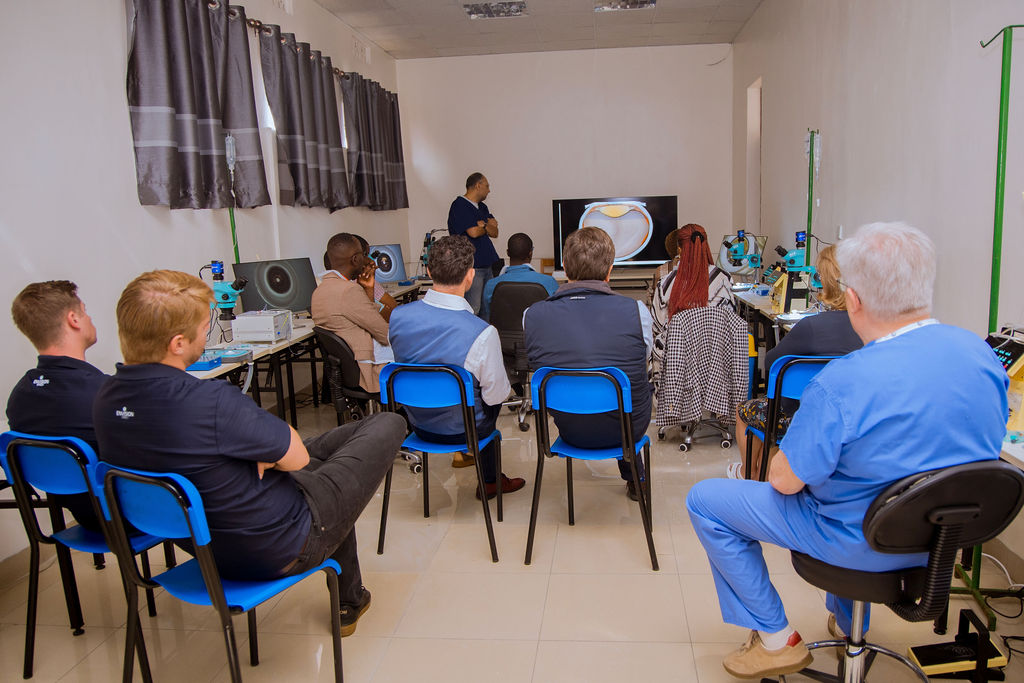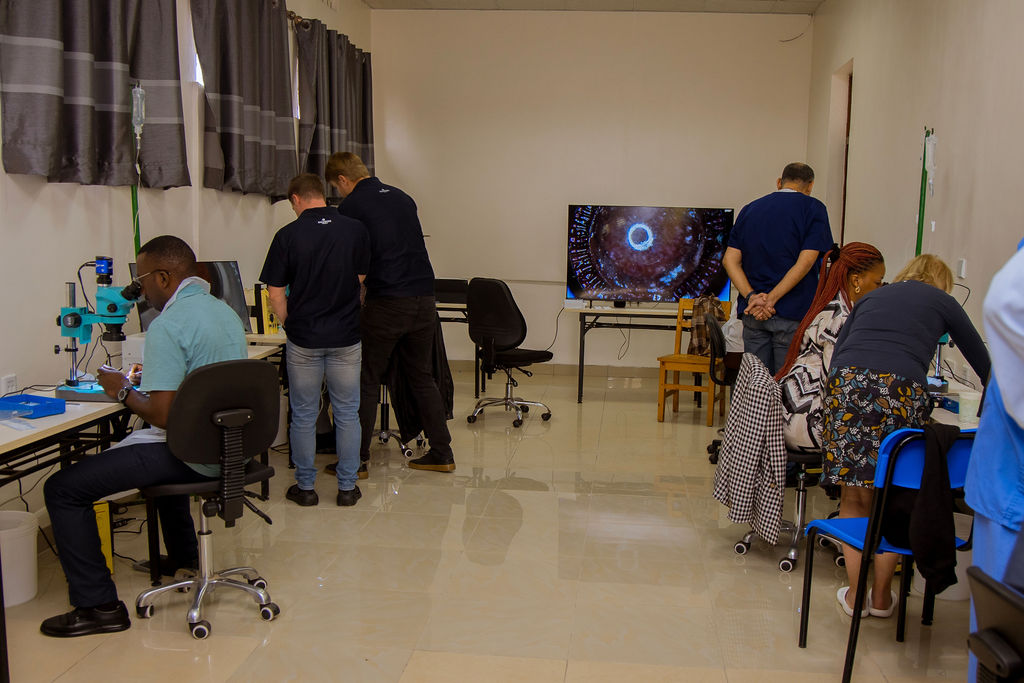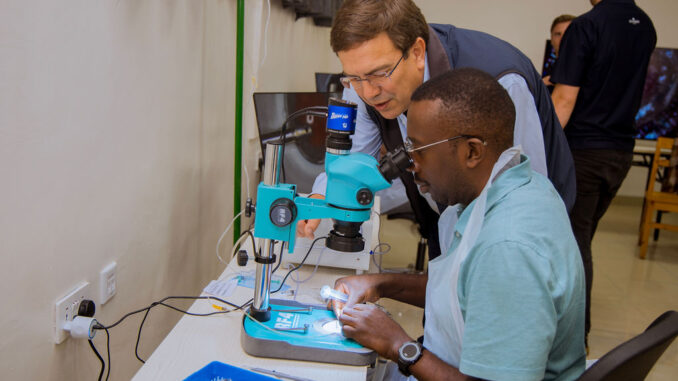
Eye surgeons from hospitals across Rwanda and the United Kingdom gathered at the Kabgayi Eye Unit for a specialized training session aimed at strengthening their ability to manage complications that can occur during cataract surgery.
The training, held on Thursday, March 5, 2026, focused on managing vitreous prolapse, a condition that can arise during cataract surgery or after eye injuries when the gel-like substance in the back of the eye, known as the vitreous, moves forward into the front part of the eye.
According to Michael Mikhail, a specialist in eye care and vitreo-retinal surgery at Kabgayi Eye Unit and one of the trainers, vitreous prolapse is among the most common complications encountered during cataract surgery and requires specialized skills to handle effectively.
“When doctors are performing cataract surgery, one of the complications that may occur is when the vitreous, the gel-like substance at the back of the eye, moves forward,” he explained. “If it is not properly managed, it can lead to serious problems, including blindness.”
Dr. Mikhail also emphasized that some diseases can significantly affect eye health. He noted that conditions such as Diabetes can lead to serious eye problems when blood sugar levels remain uncontrolled.
“There are many diseases in the body that can affect the eyes,” he said. “For example, people with diabetes may develop eye problems when their blood sugar levels remain high. That is why it is important to take care of overall health, maintain a balanced diet with plenty of vegetables, and seek medical attention immediately if any eye problem appears.”
The Director of Kabgayi Eye Unit, Dr. Livin Uwemeye, explained that the eye is composed of several delicate structures, including a gel-like substance located at the back that helps maintain its shape.
He said that during cataract surgery or following an eye injury, this substance may shift forward into the front part of the eye, requiring a specialized surgical procedure known as anterior vitrectomy.
“That is why we organized this training,” he said. “It helps doctors improve their skills so they can properly manage such complications and ensure better outcomes for patients.”
Dr. Uwemeye also urged members of the public to seek immediate medical attention in case of eye injuries.
“Anyone who suffers an eye injury should immediately go to a health center or a nearby hospital,” he advised. “Delaying treatment even for a few hours or days can worsen the condition and permanently affect vision.”
Among the trainees was Olivier Uwizeye, an ophthalmologist at Kanombe Military Hospital, who said the training plays a critical role in strengthening surgeons’ skills.
“In Rwanda, there are only a few specialists who perform surgery on the back part of the eye,” he said. “This kind of training helps us improve our knowledge so we can manage some complications in the hospitals where we work and refer patients only when the case goes beyond our capacity.”
Dr. Uwizeye also expressed appreciation to Kabgayi Eye Unit for continuously organizing training programs that support medical professionals in improving their expertise and delivering better care.
Kabgayi Eye Unit continues to play a significant role in advancing eye care in Rwanda by not only treating patients but also providing training opportunities that help strengthen the capacity of eye specialists across the country.