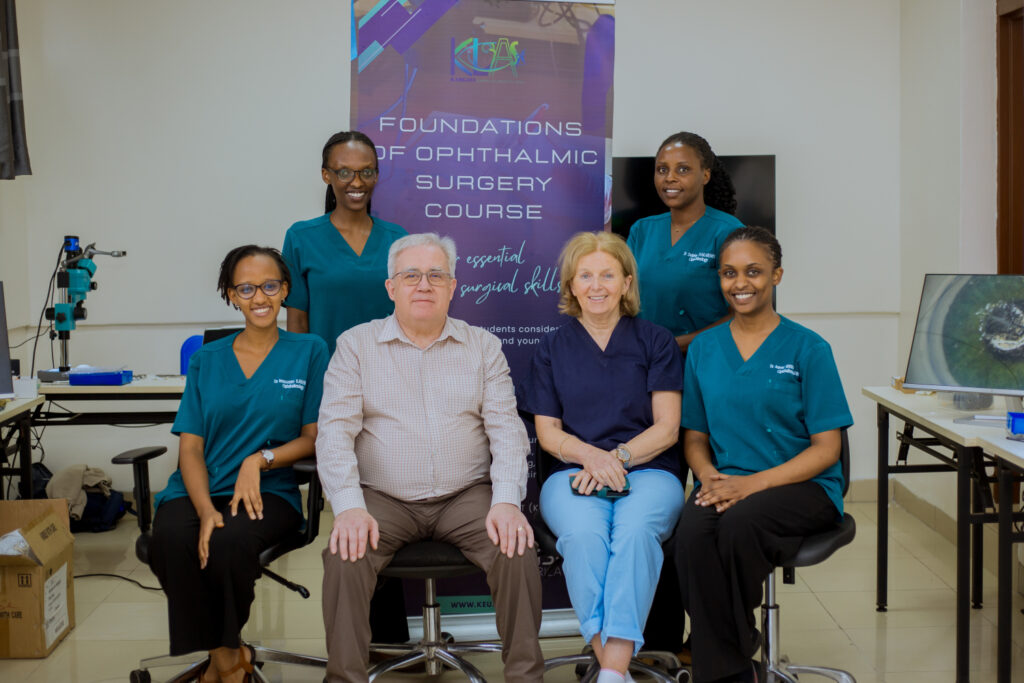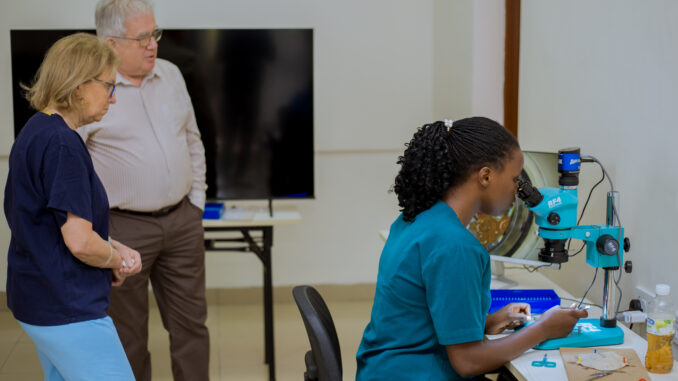
Young doctors specializing in eye care have received hands-on training in microscope-based ophthalmic surgery at Kabgayi Eye Hospital, aimed at equipping them with essential skills for performing delicate eye operations.
The two-day training, began on Tuesday, March 10, 2026, brought together four postgraduate students in ophthalmology from the University of Rwanda’s Remera campus. The program focused on building foundational surgical techniques required in eye care, particularly the use of microscopes during eye surgery.
The training was facilitated by Dr. Jim Innes, an ophthalmology specialist from the United Kingdom, who stressed the importance of introducing young doctors to surgical techniques early in their careers.
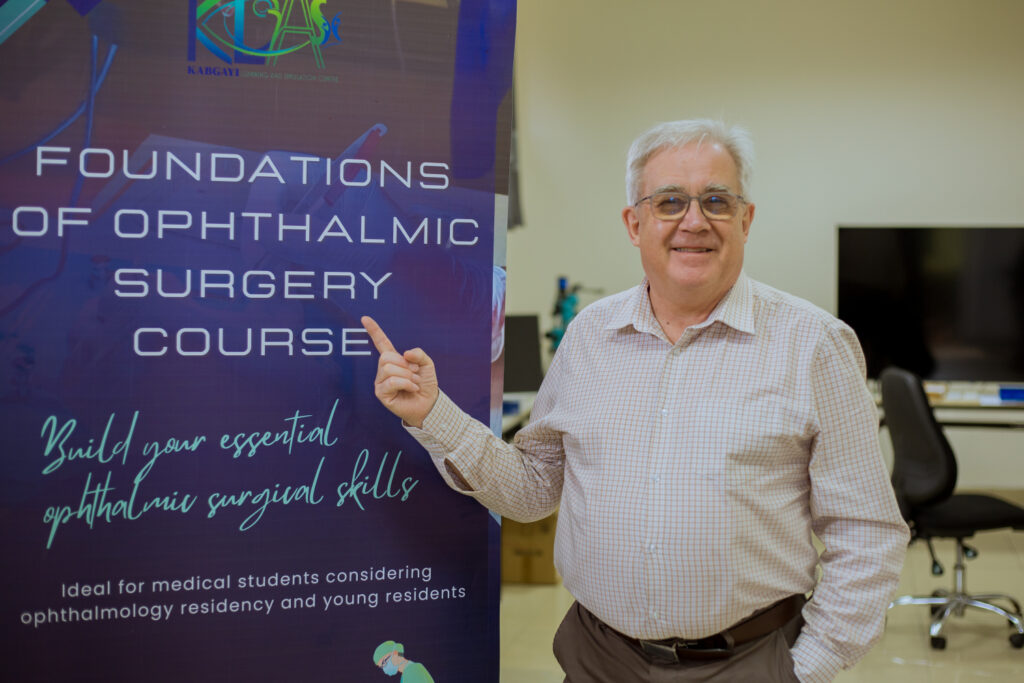
Dr. Jim Innes, an ophthalmology specialist from the United Kingdom
“The purpose of this training is to introduce young doctors to ophthalmic surgery,” Dr. Innes said. “We help them understand how eye operations are performed under a microscope and allow them to practice tying surgical knots using materials that simulate body tissues.”
According to Dr. Innes, ophthalmic surgery differs from many other surgical procedures because it involves micro-surgery that requires extremely delicate instruments and a high level of precision. The training therefore focused on core surgical skills such as suturing techniques, tying surgical knots, and performing practical exercises using microscopes.
Participants were also introduced to an innovative and low-cost training method designed to improve surgical coordination.
“Normally we use an electronic simulator that imitates the front part of the eye, where trainees touch tiny balls with surgical instruments and they change color,” Dr. Innes explained. “This time we tried a simpler approach by giving trainees very small beads and a thread and asking them to place the beads onto the thread under a microscope, creating a tiny necklace. It is a new idea that may prove very useful for surgical training.”
Trainee doctors said the training provided valuable practical experience that will help them develop proper surgical habits at an early stage in their careers.
Innocente Kabasinga, one of the ophthalmology trainees, said the program helped him understand the importance of mastering correct techniques from the beginning.
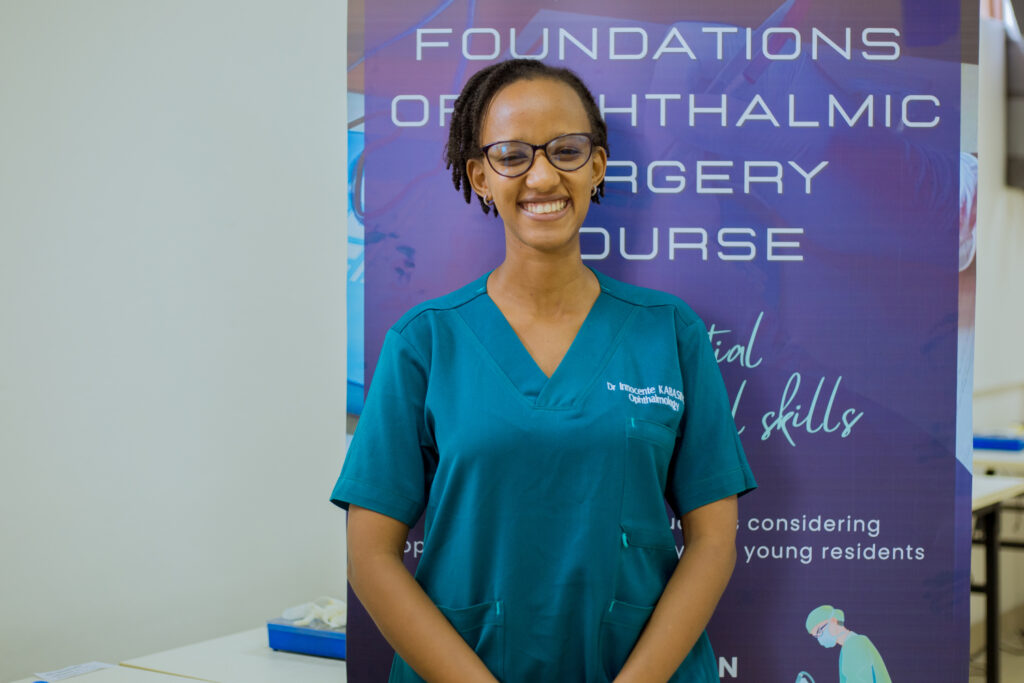
Innocente Kabasinga
“As beginners in this profession, it is important to learn the right techniques from the start so that we do not develop bad habits,” he said. “What we learned here will help us build good practices that will guide us in our future work.”
Aurore Kundwa, a first-year postgraduate student in ophthalmology at the University of Rwanda, also described the training as an important foundation for doctors beginning their residency.
“This training helped us gain basic skills such as suturing, tying surgical knots, and working under a microscope during eye surgery,” she said. “We were used to performing larger surgical procedures, but ophthalmic surgery requires working under a microscope with great precision and focus.”
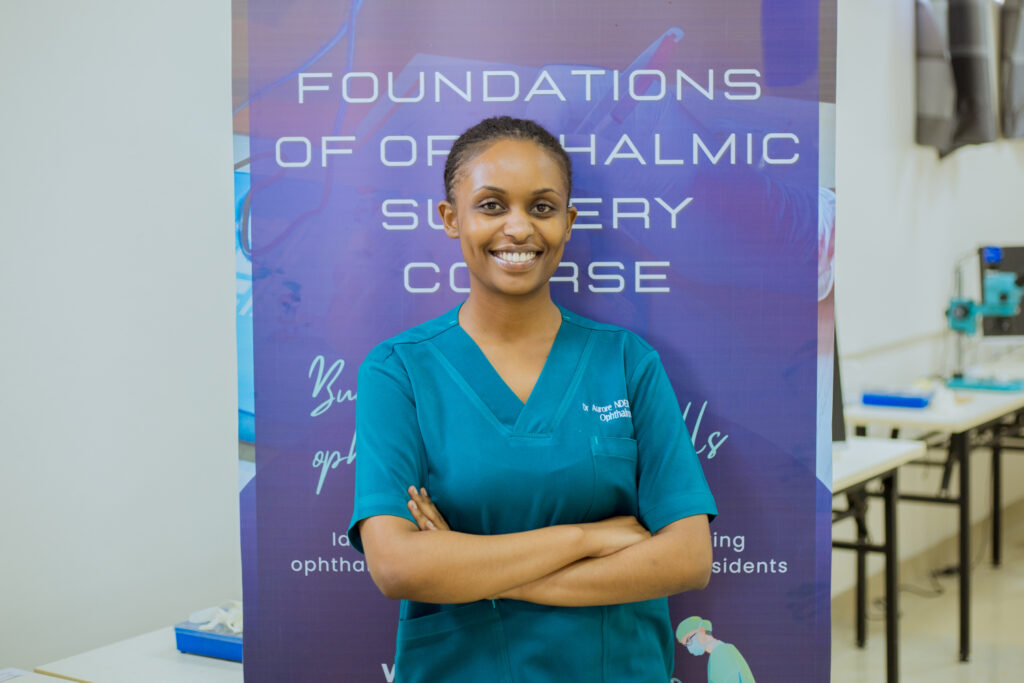
Aurore Kundwa
Both trainees emphasized the need for continuous practice to develop expertise in ophthalmic surgery and expressed hope that similar training sessions would be organized regularly to help young doctors strengthen their skills.
They also encouraged the public to prioritize eye health by seeking regular eye examinations, noting that some eye diseases that cause blindness such as glaucoma can develop silently without early symptoms.
Health experts advise that having an eye examination at least once a year can help detect eye diseases early, allowing timely treatment and preventing vision loss.