

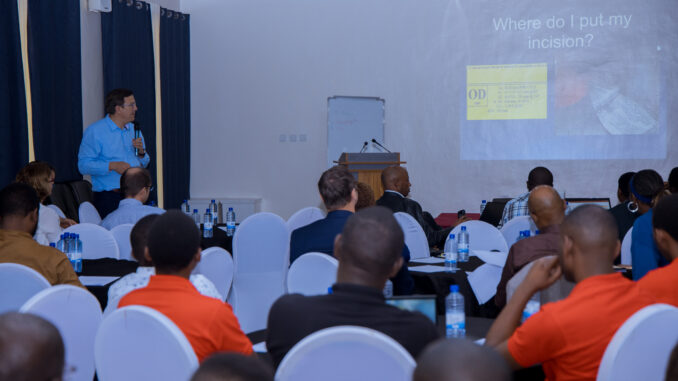
The number of people undergoing cataract surgery at Kabgayi Eye Hospital has more than doubled over the past five years, according to the hospital’s Director, Dr. Livin Uwemeye.
Dr. Uwemeye made the remarks during the “Cataract Symposium Day,” a meeting that brought together eye specialists and partners in eye care from different African countries, as well as from the United Kingdom and Ireland. The event took place at Hotel St André Kabgayi on Friday, March 6, 2026.
While the increase in surgeries is encouraging, Dr. Uwemeye acknowledged that the number of eye specialists who can perform cataract surgery is still far below what is needed. However, he said the progress made in the past five years shows that the training programs organized by Kabgayi Eye Hospital are starting to make a difference.
“When we look at the number of cataract surgeries performed, it is still below 50 percent of what is needed,” he said. “This means many people who need the surgery are not yet receiving it, and even among those who do, outcomes are not always perfect.”

According to Dr. Uwemeye, the symposium was organized to address the growing burden of cataracts, which remain one of the leading causes of avoidable blindness worldwide.
“We organized this symposium because cataracts continue to cause avoidable blindness across the world, especially in developing countries including those in Africa,” he explained. “By bringing experts together, we can share knowledge, look at new technologies, discuss challenges, and find ways to improve the care we provide.”
Dr. Uwemeye also reminded the public that cataracts cannot really be prevented because they are mainly linked to aging. Instead, he urged people to seek medical help early whenever they notice changes in their vision.
“There is no specific way to prevent cataracts,” he said. “The important thing is to know that treatment exists. Anyone who notices that their vision is becoming unclear or different should visit a health facility so they can be examined.”
Dr. Egide Gisagara, a lecturer and Head of the Ophthalmology Department at the University of Rwanda, said such gatherings are important because they create opportunities for professionals to learn from each other.
“This symposium brings together eye specialists and experts from different places to exchange knowledge and experience,” he said. “It also helps us train our students better, and when we train them well, our patients ultimately receive better care.”
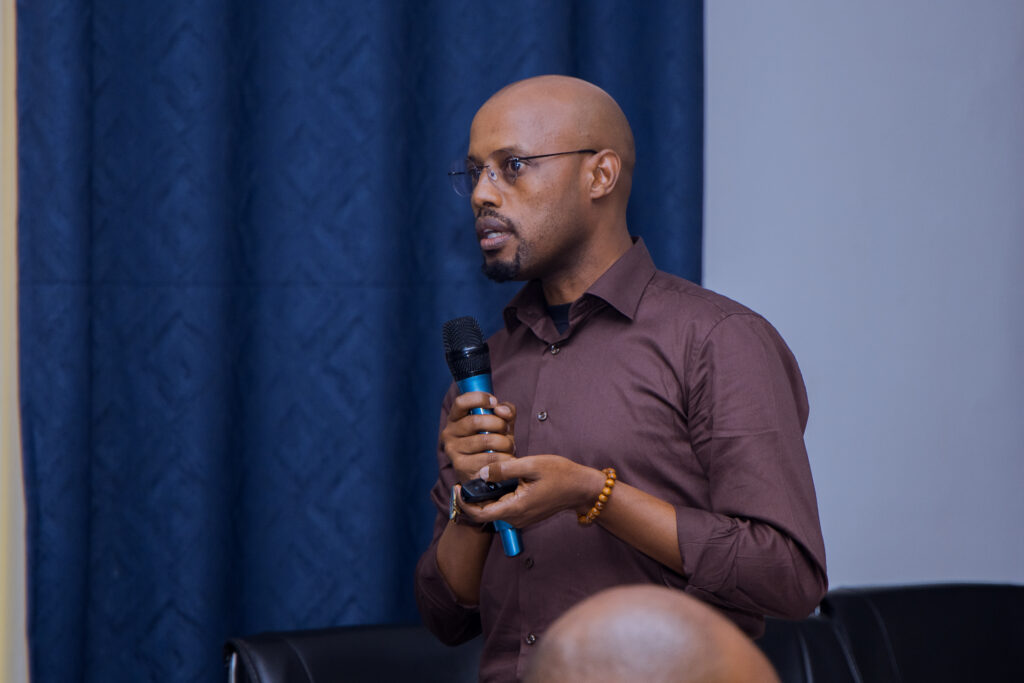
He suggested that the impact of the symposium could be even greater if it were organized more frequently and in different parts of the country.
“This is an annual event, but if it could be held more than once a year, it would be even better,” he said. “Also, since it is currently held only in Kabgayi, it can be difficult for some professionals to attend. If it were organized in other regions as well, more people would benefit.”
Dr. Gisagara also used the opportunity to encourage young professionals and students to consider careers in eye care, noting that the country still faces a serious shortage of specialists.
“At the moment we have only about 40 percent of the eye care workforce we actually need,” he said. “That means 60 percent is still missing. We encourage more people to join this field so that together we can improve eye care for Rwandans.”
Among those who attended the symposium was Dr. Iggy Ndevowa, an ophthalmologist from Uganda. He said the experience was far more valuable than he had expected.
“We shared knowledge and learned from one another,” he said. “What I gained here is much more than I expected. The training clearly explained different cataract surgery techniques, the mistakes that can happen, and how to deal with them. That gives us more confidence when treating our patients.”
He added that continuous learning is essential for eye specialists.
“Learning never stops for an eye doctor,” he said. “Meetings like this allow us to exchange experiences and improve the care we provide to our patients.”
Kabgayi Eye Hospital says it will continue strengthening its training programs and partnerships as part of ongoing efforts to improve eye care services and reduce preventable blindness in Rwanda and beyond.