

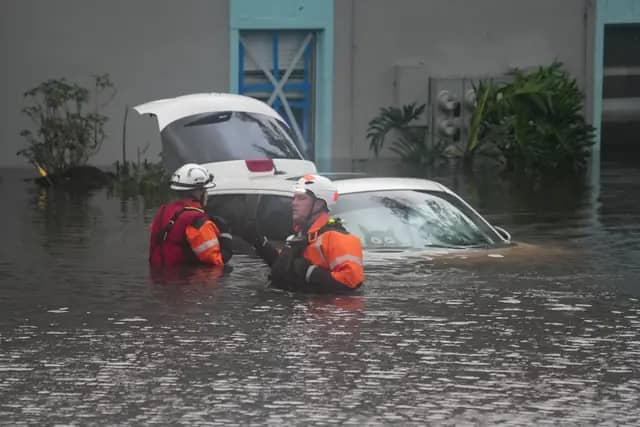
As the world grapples with the escalating impacts of climate change, 2024 has witnessed a dramatic rise in natural disasters, affecting millions and inflicting economic losses in the billions.
From hurricanes and floods to extreme heat, the frequency and severity of these events have intensified, raising urgent concerns for global communities.
September alone saw devastating disasters across multiple continents. In Nepal, floods and landslides resulted in approximately 193, while parts of Europe experienced significant flooding.

Hurricane Helene claimed over 64 lives and caused extensive damage in the United States, At least 16 people are known to have died across the US state as the result of hurricane devastation and Hurricane Bebinca wreaked havoc in Shanghai, China, displacing many residents.

These calamities are not only affecting human lives but also endangering ecosystems.
In Rwanda, Ministry in Charge of Emergency Management (MINEMA) reported that from January to May 2024, the country experienced 288 distinct disasters, resulting in 49 deaths and injuring 79 individuals. The infrastructure has suffered as well, with roads and bridges sustaining significant damage.

In August, The Rwanda Meteorology Agency (METEO RWANDA) released the seasonal forecast for the September to December (SOND) rainfall season 2024.
The agency in collaboration with the Ministry of Environment, MINEMA and Rwanda Agriculture and Animal Resources Development Board (RAB), advised the public institutions, NGOs, Private sector and the general public to take note of the forecast and use it to make informed plans and decisions on intense and frequent lightning strikes especially at the beginning of the season, strong winds, hailstorms, intra seasonal dry spells in drought prone areas, heavy rains triggering strong runoffs and heavy streams on steep slopes and rivers.
Globally, a report from the international development charity Christian Aid revealed that Extreme weather caused damages amounting to $41 billion in the first half of 2024. This period coincided with the last major climate conference (COP28) held in the United Arab Emirates, where discussions highlighted the urgent need for action.
Despite the alarming statistics, the report noted insufficient progress in transitioning from fossil fuels or providing support to low-income countries struggling with climate-induced disasters. In the six months following COP28, over 2,500 lives were lost worldwide due to extreme weather events.
Notable tragedies include a January flood in Brazil that claimed at least 169 lives and caused $7 billion in damages, and devastating floods in South and Southwest Asia, which resulted in 214 deaths and losses of $850 million. Extreme heat affected regions in Asia, particularly Myanmar, where over 1,500 fatalities were reported.
Additionally, flooding caused by a cyclone in East Africa resulted in 559 deaths across Kenya, Ethiopia, Burundi, Tanzania, Somalia, and Uganda in the first six months of 2024.
The combined toll of these disasters highlights the urgent need for investment in climate resilience and disaster preparedness. Christian Aid emphasizes that halting new investments in fossil fuels is essential, urging governments to redirect funding toward renewable energy initiatives.
“We cannot heal the burns caused by the climate crisis while we are still throwing fossil fuels on the fire,” said Mariana Paoli, Christian Aid’s Global Advocacy Lead.
She called for wealthier nations to provide substantial support for combating climate issues and to demonstrate political will in addressing the impacts of climate-induced disasters.
Experts in environmental science reiterate the critical need for effective strategies to mitigate the effects of climate-related disasters.
Fiona Nunan, Professor of Environment and Development, University of Birmingham, said “This year we’ve seen communities across the world struck by cyclones, inundated with flooding and baked by terrible heatwaves”.
“Climate change will continue unless urgent measures are taken to reduce greenhouse gas emissions. These disasters highlight the need for substantial funding to keep communities prepared for potential disasters,” She added.
Professor Joanna Haigh, former Co-Director of the Grantham Institute at Imperial College London, emphasized the importance of investing in disaster preparedness and sustainable practices.
“Climate change is clearly having a hugely harmful impact around the world this year. Not all of these extreme weather events might be making headline news but added together they paint a stark picture of the suffering being caused by the climate crisis. These storms, floods and heatwaves will only get worse if we don’t reduce our emissions urgently. The good news is there is a lot that governments can do to accelerate the energy transition away from fossil fuels to clean, low carbon renewables which will put us on a much safer path.” She said.
The disasters of 2024 serve as a stark reminder of the increasing risks posed by climate change. With losses estimated at $75 billion, the human suffering and economic fallout underscore the urgent need for comprehensive action to build resilience against future disasters.
If you have a story idea you’d like us to explore in-depth or any feedback you’d like to share, feel free to write to us at ickjournalism@gmail.com