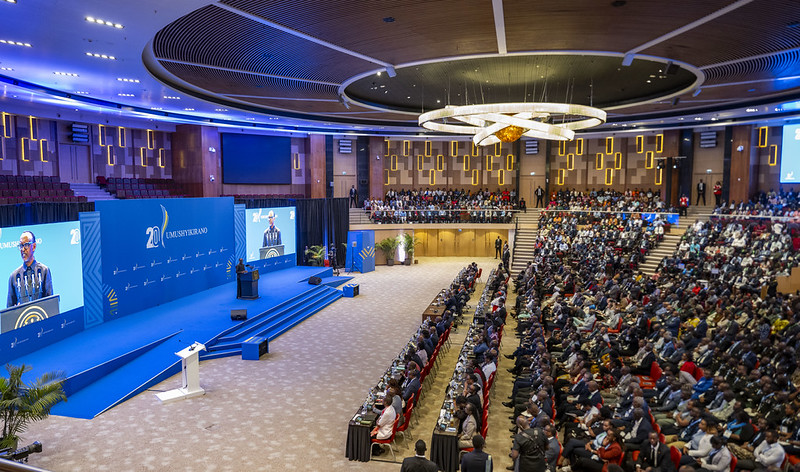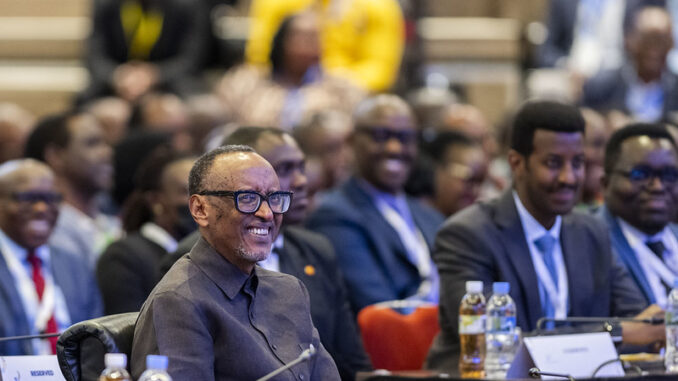
President Paul Kagame has called for concrete measures to allow Rwandans to earn income from social media platforms, noting that the country is currently missing out on revenues that users in other countries are already accessing.
He made the remarks on Thursday, February 6, 2026, during the second day of 20th National Umushyikirano Cauncil, following concerns raised by musician Itahiwacu Bruce, popularly known as Bruce Melodie, who said that many social media platforms do not yet generate income for Rwandan users.
The artist told the Umushyikirano that social media has become a major economic opportunity for young people and creatives worldwide, offering significant income streams, but that Rwandans continue to face barriers that prevent them from benefiting fully.
“We ask the government to help us monetize these social media platforms for people who produce meaningful content,” Bruce Melodie said. “Most work today is done on social media.”
He added that while creators in other countries earn substantial income from platforms such as TikTok, Rwandans are often forced to rely on foreign citizenship or accounts to access monetization features.
“On TikTok, people in other countries earn a lot of money, but for us Rwandans, we sometimes have to use other nationalities in order to access income from these platforms,” he said.
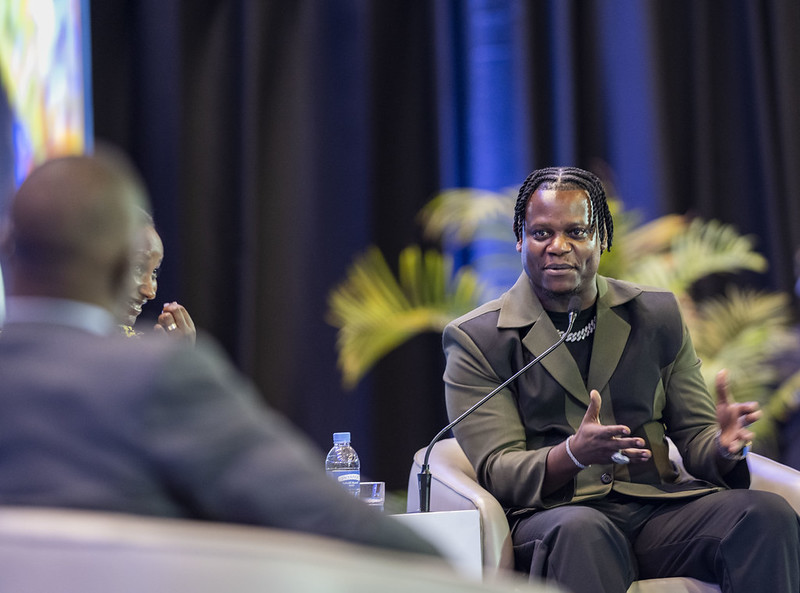
Bruce Melodie speaks out on the lack of social media monetization for Rwandan users
Bruce Melodie noted that resolving this issue would help reduce youth unemployment by opening new digital income opportunities.
President Kagame then asked the Minister of ICT and Innovation to explain what is required to address the challenge.
“What does what Bruce has raised require? I did not fully understand it,” the President said.
In response, Bruce Melodie explained that income from social media largely comes from advertising that runs alongside digital content.
“To earn money from social media, advertisements are placed on videos. That is where the income comes from. For example, when I release a song and travel abroad, I see ads appearing on my content, and when people view or click on them, revenue is generated,” he explained.
The Chief Executive Officer of the Rwanda Media Commission (RMC) and digital content creator, Mutesi Scovia, confirmed that the challenge exists and continues to affect Rwandan social media users.
“We have held discussions with the Ministry of Youth and the Ministry of ICT, and we were informed that Google says Rwanda has not yet reached the required advertising threshold, which is why monetization is not enabled,” she said. “If the government supports us, advertising could increase, just as services like Google Maps already operate effectively in the country.”
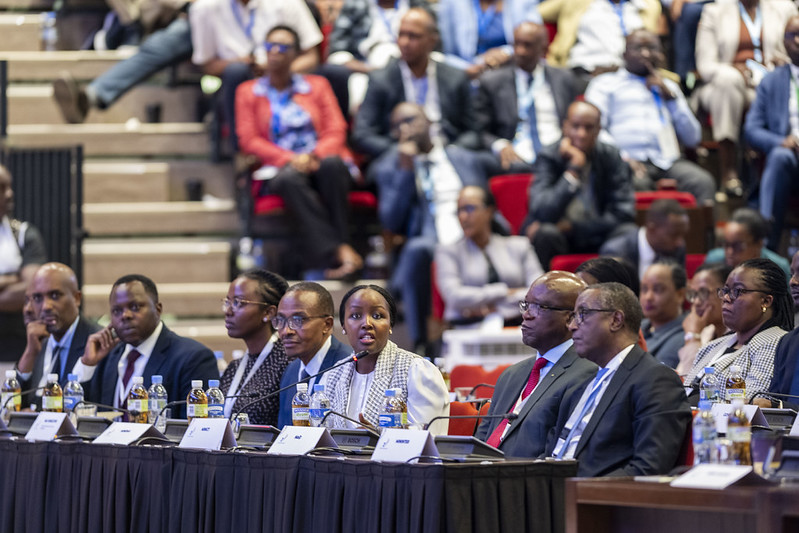
The Minister of ICT and Innovation (MINICT), Paula Ingabire, said that while Rwanda meets several requirements, there are still conditions set by global platform owners that must be fulfilled before monetization can be fully enabled.
“Companies such as Meta, YouTube and TikTok all have policies and regulations that determine how creators can monetize their content,” she said.
The minister explained that requirements include strong legal frameworks to protect users, data protection regulations, and clear tax systems—areas in which Rwanda has already made progress. However, she noted that advertising volumes remain a key challenge.
“As advertising increases, content creators in the country will be able to earn a share of the revenue. However, we are still below the required level. It requires at least between USD 1 million and USD 1.5 million in advertising revenue per month,” Ingabire said.
She added that Rwanda already has the necessary infrastructure and systems to support digital advertising revenues and that awareness campaigns are ongoing to encourage more businesses to advertise online.
President Kagame urged relevant institutions to intensify sensitization efforts among the private sector and businesses, encouraging them to invest more in digital advertising so that Rwanda can qualify to monetize social media platforms and unlock income opportunities for its citizens.