

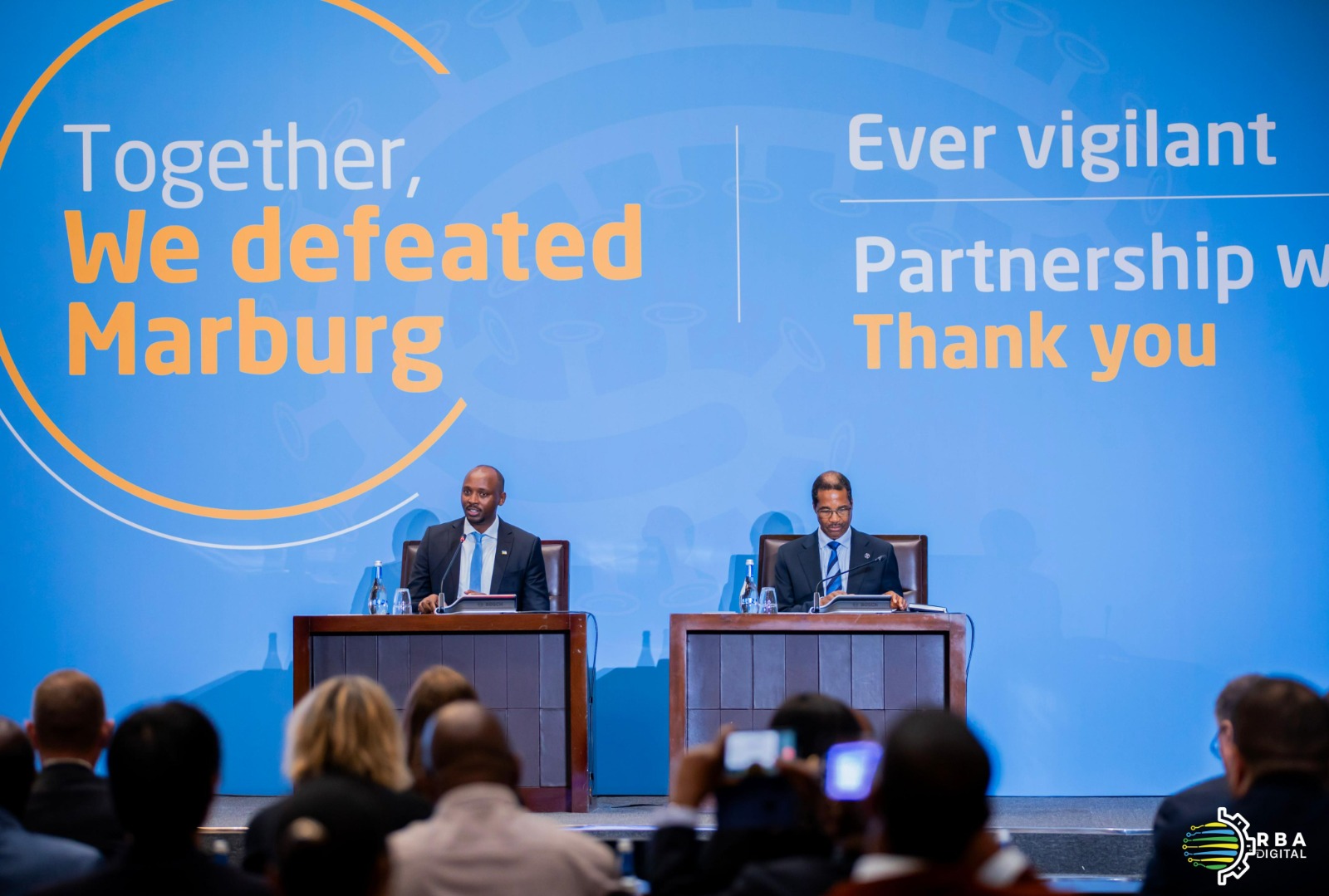
Rwanda has officially declared the end of the Marburg Virus Disease (MVD) outbreak as of Friday, December 20, 2024.
The outbreak, which began with the country’s first confirmed case on September 27, resulted in 66 confirmed cases and 15 deaths, yielding a case fatality ratio of approximately 23%.
During the announcement, Minister of Health Dr. Sabin Nsanzimana emphasized the necessity for ongoing vigilance, stating, “We believe it’s not completely over because we still face risks, especially from bats. We are continuing to build new strategies, form new teams, and adopt advanced technologies to track their movements, understand their behaviour, and monitor who is interacting with them.”

He further highlighted the importance of enhancing surveillance and building capabilities to respond to such health challenges, as well as supporting survivors and addressing societal stigma.
The Rwandan government’s response to the outbreak was marked by rigorous testing, contact tracing, and isolation measures. By early October, approximately 3,000 individuals were being monitored due to contact with infected persons.
The World Health Organization (WHO) and the Africa Centres for Disease Control and Prevention (Africa CDC) played pivotal roles in supporting Rwanda’s efforts.
Notably, the WHO advised against travel and trade restrictions with Rwanda, acknowledging the country’s rapid and effective response.
In early October, Rwanda received about 700 doses of trial vaccines, delivered by the Sabin Vaccine Institute with support from the U.S. government and international partners.
These vaccines were prioritized for healthcare workers, frontline response teams, and individuals who had contact with confirmed cases. By mid-October, more than 200 people had been vaccinated.
Additionally, Gilead Sciences donated 5,000 vials of remdesivir as an emergency treatment measure.
The outbreak predominantly affected healthcare workers, who comprised a significant portion of the cases.
This underscored the critical need for stringent infection prevention and control measures within healthcare settings. The Rwandan Ministry of Health implemented measures such as restrictions on hospital visits and attendance at funerals to curb the virus’s spread.
The WHO continues to collaborate with Rwandan authorities to maintain critical measures for swift detection and response in case of any resurgence or new spillover of the virus.
Furthermore, efforts are ongoing to implement and sustain a holistic care program for MVD survivors to help them overcome any after-effects and to mitigate societal stigma associated with the disease.